Apple’s Next 50 Years: Execs Say the iPhone Isn’t Going Anywhere—Even In the AI Age
Nostalgia has never sat well with Apple. Back in 2008, as the 25th anniversary of the original Macintosh approached, I brought the milestone up to Steve Jobs, and he shut the conversation down immediately. “If you look backward in this industry, you’ll get crushed,” he told me coldly. “You have to keep your eyes forward.”
Fast forward to today, as Apple’s 50th birthday draws near, the company is reluctantly throwing itself into a slate of concerts and commemorative events. We’re also being flooded with new books, thinkpieces, and oral histories chronicling the company’s earliest days.
Rather than adding my voice to the crowd of people retreading old Apple memories, I decided to take Jobs’ advice and ask the company to look ahead: What does Apple hope to achieve over its next 50 years?
Earlier this month, I sat down with two top Apple executives to talk through that very question. The first is Greg “Joz” Joswiak, Apple’s senior vice president of worldwide marketing, who has been with the company since 1986. The second is John Ternus, SVP of hardware engineering and widely seen as the leading candidate to replace Tim Cook as CEO when he steps down; Ternus has worked at Apple for 25 years. I also got a quick chat with Cook himself, right before Alicia Keys took the stage for a performance outside Apple’s Grand Central Terminal store—the kickoff for Apple’s surprisingly high-profile, if unwilling, anniversary celebration.
After acknowledging Apple’s uncharacteristic turn to party mode—Joswiak admits this anniversary is “too special” to skip—we turned our conversation to the future. Since kickstarting the personal computer revolution, Apple has successfully navigated multiple major industry turning points. With the Macintosh, it perfected the graphical user interface that made computers accessible to everyday users. The iMac set the company up perfectly for the internet boom. And of course, even though it entered the game late, Apple completely dominated the mobile age with the launch of the iPhone. These core product lines remain essential to Apple’s business even today—just this month, the company launched the much-hyped new MacBook Neo, the latest update to a product franchise that’s now 42 years old. But right now, the future belongs to artificial intelligence, a space where Apple has so far fallen short of the hype that’s swept competitors.
The two leaders push back hard on that take. Apple, they insist, is already leading the AI revolution. “We were working on AI before it was even called AI!” Joswiak says. “Every top chatbot out there runs better on our devices than anyone else’s.” Ternus argues that even if Apple didn’t pioneer the core generative AI technologies that are grabbing headlines now, the company still stands to gain massively. “Our products are the best place for people to use all of the existing AI tools that are being built,” he says.
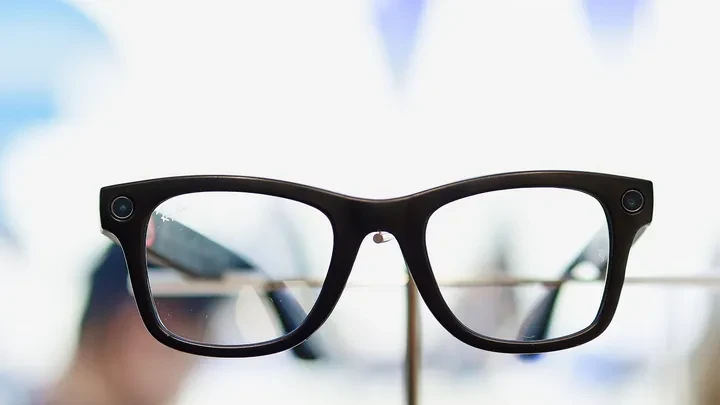
I press them on this point. After all, if we’re looking decades into the future, shouldn’t we expect that we’ll move beyond our current computing models to something built specifically to unlock AI’s full potential? That’s exactly what former Apple chief design officer Jony Ive is doing right now in partnership with OpenAI, after all. The pair are just one entry in a growing race to build entirely new types of hardware designed from the ground up for AI. “I’d assume you want one of those next-generation AI devices to be an Apple product, right?” I ask them.
Their answer suggests that’s not a given. “Let’s not forget that nothing you just described conflicts with the iPhone,” Joswiak says. “The iPhone isn’t going anywhere. It will remain a central part of any of those future AI developments you’re talking about.”
Wait—does Apple really think people will still be using the iPhone 50 years from now?
“It’s hard to imagine a future where it doesn’t exist,” Joswiak says. “That’s where everyone else is stumbling. They don’t have an iPhone, so they’re scrambling to figure out what to build next. A lot of the stuff they’re talking about ends up just being accessories for the iPhone anyway. We can’t get into specific future roadmaps, but I can tell you this: iPhones aren’t going anywhere.” (Even with this bold claim, I’d be shocked if Apple doesn’t release some sort of AI-first gadget in the next few years.)
Later that day, when I spoke briefly with Cook, I asked him straight away about Apple’s next 50 years. He launched into an impassioned reflection on Apple’s people, core values, and company culture, predicting that no matter what unexpected turns the future brings, those factors will keep Apple unique and wildly successful. “Yes, the technologies of the future will change,” Cook says. “Yes, there will be new products and entirely new product categories. All of that is true. But the things that make Apple Apple will stay the same for the next 50 years, the next 100, even the next 1,000.”
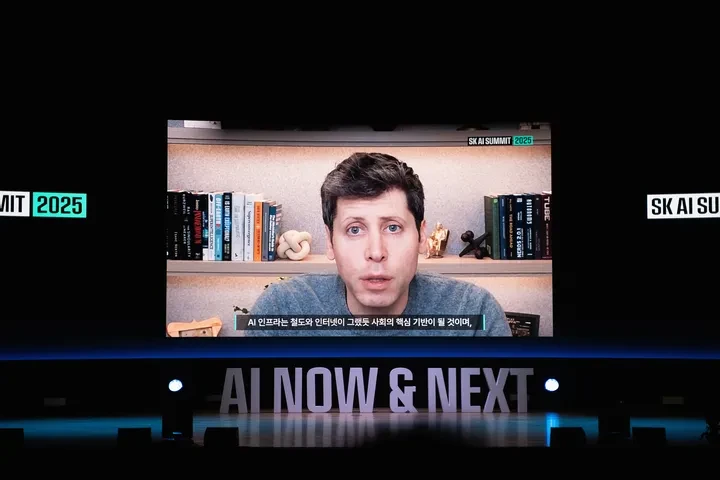
That prediction, of course, assumes that superintelligent AI won’t completely reshape the fabric of reality over the next 50 years, let alone the next 1,000. It also directly contradicts the beliefs of leaders at top AI companies. OpenAI CEO Sam Altman has even gone so far as to predict that his own successor at the helm of OpenAI won’t be a human—it will be an AI model. So does Cook see that as a possible future for Apple at any point over the next 50 years?
Cook laughed heartily at the idea. “If you look at the leadership page of Apple 50 years from now,” he said, “there won’t be an AI agent sitting on that list.” What the people of 2076 will be using to pull up that leadership page, though, went unsaid.
This is an installment of Steven Levy’s Backchannel newsletter. Read previous editions here.