The Tiny German Startup Taking on Silicon Valley in AI Image Generation
If you walk the exhibit and meeting floors of the HumanX conference at San Francisco’s Moscone Center, it’s almost impossible to shake the feeling that you’re standing at the very heart of the global AI industry. Top tech leaders pack every corner of the venue, and the headquarters of two of the field’s biggest power players — OpenAI and Anthropic — sit just a few blocks away. But one unexpected contender, a 70-person startup based 5,000 miles across the Atlantic in Germany’s Black Forest (a region best known internationally for its cured ham), has emerged as one of the top rivals to Silicon Valley’s leading AI research labs in the fast-growing AI image generation space.
Back in December, Black Forest Labs closed a funding round that valued the young company at $3.25 billion, capping a stretch of high-profile partnership wins that included powering AI image-generation features for both Adobe and graphic design platform Canva. It has even locked in supply agreements with major U.S. AI labs including Microsoft, Meta, and Elon Musk’s xAI to integrate its image technology into their own products.
Nearly two years since its official launch, Black Forest Labs has grown successful enough that it can afford to be picky about which partners it works with. Back in 2024, Musk’s xAI tapped the German startup to build the first image generation tool for its Grok chatbot. The partnership boosted Black Forest Labs’ public profile dramatically, but it also sparked significant controversy over Grok’s famously lax content safeguards. The collaboration ended just a few months later, after xAI developed its own in-house AI image model.
Now, people familiar with the matter tell WIRED that xAI has recently reached out to Black Forest Labs again to negotiate a new licensing deal for the startup’s technology. This time around, however, Black Forest Labs rejected the offer, sources say. The startup deemed another partnership with xAI too operationally challenging, citing the company’s well-documented chaotic internal work environment. xAI did not immediately respond to WIRED’s request for comment on the outreach.
Just this past September, Black Forest Labs did sign a major new deal: a $140 million multi-year agreement that grants Meta access to its AI image-generation technology.
Big-name AI labs are eager to partner with Black Forest Labs for good reason: its image generators rank among the most capable in the world. Third-party AI analyst firm Artificial Analysis places its top offerings just behind those developed by OpenAI and Google in independent benchmarks. The startup also hosts some of the most downloaded free text-to-image models on popular AI developer platform Hugging Face, a sign that a large share of the AI image tools available on the consumer market today are likely powered by a free variant of Black Forest Labs’ underlying technology.
What makes the startup’s success even more notable is that it has historically operated with far fewer resources than its biggest Silicon Valley rivals. That constraint pushed the team to prioritize a more efficient research direction called latent diffusion, a method where an AI model first generates a rough, low-detail blueprint of an image before gradually filling in finer, more precise details.
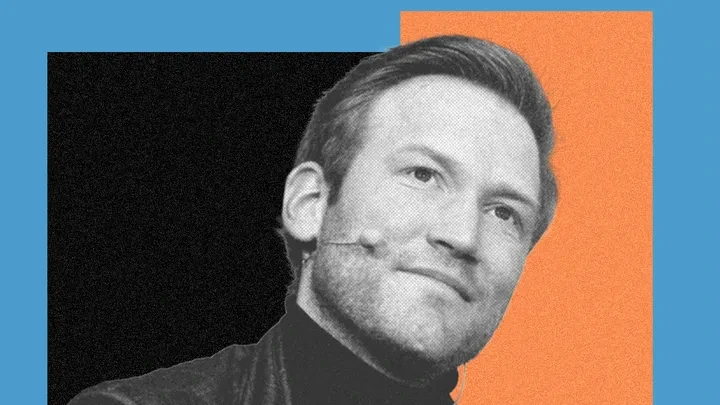
Latent diffusion “enabled us to put out very powerful models that took orders of magnitude less resources than our competitor’s models,” Black Forest Labs cofounder Andreas Blattmann told WIRED during an on-stage interview at the HumanX conference this week.
Even with its runaway success in image generation, the company sees this category as just a starting point. Blattmann revealed that the startup plans to unveil a robot powered by one of its custom AI models later this year, though he declined to share which company is manufacturing the robot’s hardware. The push into robotics is part of the company’s broader long-term bet on building AI systems that can perceive and take action in the physical world, not just generate digital content.
“Visual intelligence is so much more than content creation. Content creation is just the first segue into this entire technology,” Blattmann said. “What I’m personally super excited about—and that’s a pattern throughout this conference—is physical AI.”
Sources also tell WIRED that Black Forest Labs is currently in discussions with multiple hardware companies to power AI features for products ranging from smart glasses to consumer and industrial robots.
Building a Leading AI Lab in the Black Forest
Blattmann and his cofounders Robin Rombach and Patrick Esser first made their names in the global AI research community when they published groundbreaking work on AI image models back in 2021. In 2022, the trio joined Stability AI and released Stable Diffusion, the wildly popular open-source AI image generator built on their earlier academic research. Just two years later, they announced their exit from Stability AI and launched their own independent startup: Black Forest Labs.
Rather than relocating to the San Francisco Bay Area to join the crowded AI ecosystem there, the three founders chose to keep the company’s headquarters close to their hometowns in Freiburg, Germany, at the edge of the Black Forest. Blattmann says that call has been one of the biggest contributors to the startup’s success so far.
“It can be a huge asset to not be where everyone else is,” he explained. “Everyone who has ever run a startup knows that it’s a lot about the ability to focus and work on what matters. Whenever I’m here in SF I love it, but it’s also very hard to focus because there’s so much stuff going on.”
It’s no secret that many high-profile U.S. AI labs have struggled to maintain focus amid the breakneck pace of the AI boom in recent years. The most prominent recent example is OpenAI, which recently discontinued its standalone Sora AI video generation app to refocus its team on the company’s core business priorities (though the company did acquire the popular tech talk show TBPN just a few weeks after that announcement).
So far, Black Forest Labs has stood out as one of the more disciplined players in the AI space, sticking to its core strengths early on. But as it expands beyond digital content creation into the new, complex world of physical AI, the company’s ability to stay focused will face its biggest test yet.