Anonymous Confessions: The Project Giving ICE Agents a Space to Speak Out
When immigration emerged as a defining policy priority of Donald Trump’s second presidential administration, the U.S. Department of Homeland Security (DHS) stepped into the national spotlight. Under the 2025 One Big Beautiful Bill Act, DHS — which oversees Immigration and Customs Enforcement (ICE), Customs and Border Protection (CBP), U.S. Citizenship and Immigration Services (USCIS), and half a dozen other federal agencies — secured more than $80 billion in extra funding. By January of that year, the department announced it had added over 12,000 new frontline agents to its ranks.
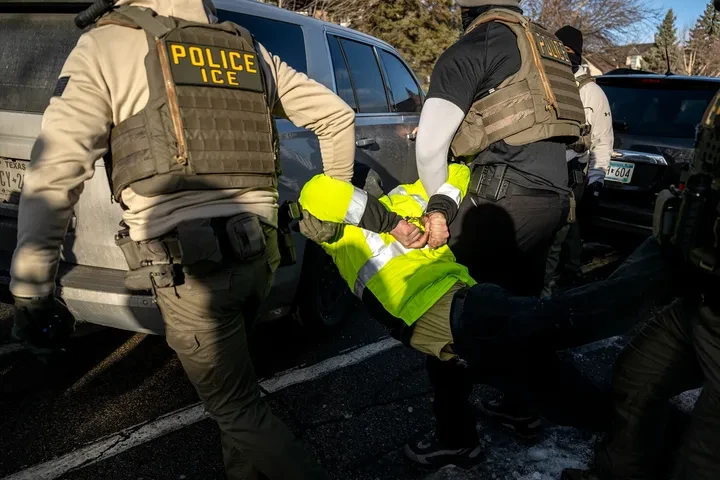
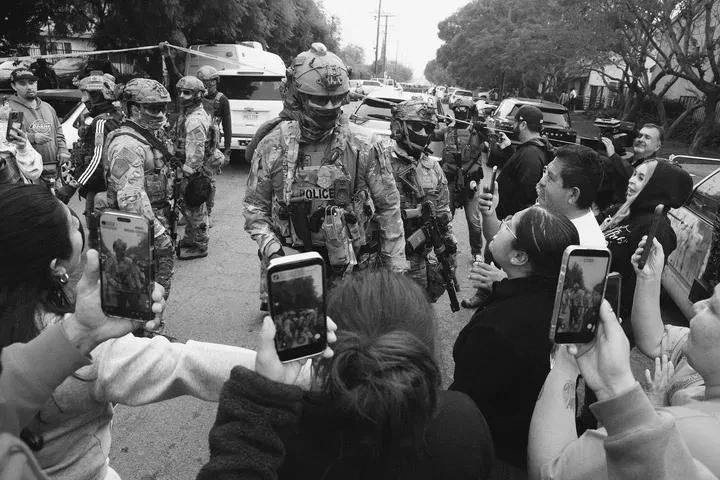
Even as immigration enforcement agents have flooded major cities like Los Angeles and Minneapolis in growing numbers, DHS has kept almost total secrecy around the details of its operations. Officers carrying out raids and arrests frequently wear masks and operate unmarked vehicles. And because enforcement efforts now draw on federal law enforcement officers from agencies across the government, it’s often impossible to tell which department a given officer works for — let alone confirm their actual identity. While DHS has repeatedly clashed with press outlets seeking information about its work, rank-and-file ICE agents have for the most part stayed silent, even when many privately hold conflicting views about their jobs and the agency’s current direction.
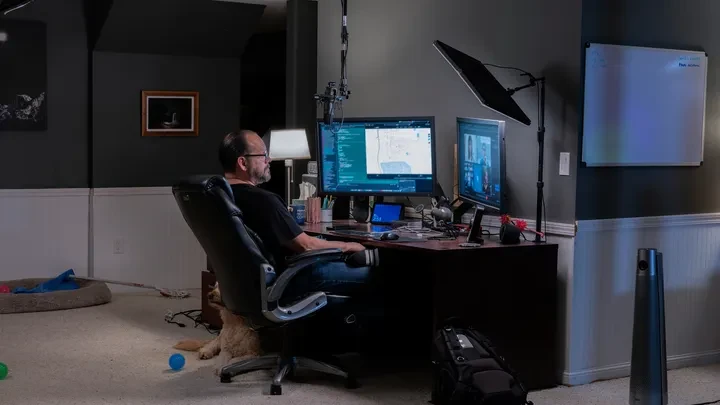
Independent journalist Karl Loftus, who runs the Instagram account @deadcrab_films, launched a groundbreaking new project called Confessions of an ICE Agent in the wake of the expanded enforcement push in Minneapolis. On the account, Loftus publishes raw, unfiltered interviews with current workers across DHS’s immigration enforcement apparatus. His sources include agents from ICE’s two core divisions — Homeland Security Investigations (HSI) and Enforcement and Removal Operations (ERO) — as well as serving CBP officers. He guarantees full anonymity to participants, giving them a space to share their unvarnished opinions outside the constraints of official DHS messaging and traditional corporate media. In exchange, he gains an unprecedented look at the inner experiences of people working inside the agency, building a living historical archive of this polarizing moment in U.S. immigration policy.
In one early post, a biracial agent who spoke shortly after Trump announced he would replace then-DHS Secretary Kristi Noem told Loftus he viewed Noem as a “DEI hire.” In another interview, an HSI agent slammed top U.S. government leaders as “imbeciles,” admitting he was “disgusted by nearly all of them.” A third HSI agent raised alarms about colleagues breaking federal law, and complained he was forced to pause active investigations into child sexual abuse to prioritize immigration enforcement work. “If they gave child exploitation cases even a fraction of the attention, funding, resources, personnel, and analytical support they’re pouring into immigration enforcement right now, we could do so much good,” the agent told Loftus.
WIRED sat down with Loftus to talk about public reaction to this deeply polarizing project, how he vets his anonymous sources, and the constant pressure he faces to pick a political side in the immigration debate. When reached for comment by WIRED, a DHS spokesperson said the department cannot verify the authenticity of any anonymous interviews, but added that DHS and its HSI unit “is not slowing down and remains committed to all aspects of its mission, leveraging a whole-of-government approach to address threats to public safety and national security.”
This conversation has been edited for length and clarity.
WIRED: Before launching this project, your Instagram account mostly focused on work like disaster recovery after Hurricane Helene and other similar on-the-ground stories. How did you end up reporting on ICE?
Karl Loftus: Back in 2018, I volunteered in North Carolina in the aftermath of Hurricane Florence, spending four days on the ground doing search and rescue work. That experience is what sparked my passion for disaster response work. Later, I spent seven weeks in Jamaica responding to Hurricane Melissa, partnering with a handful of different nonprofits. I worked with Global Empowerment Mission to repair roofs at hospitals and medical clinics, to help get local healthcare infrastructure back up and running, and I also collaborated with World Central Kitchen. My whole job while I was there was documenting the response.
I’d originally planned to head to Wisconsin, where I’m from, for the holidays to visit family, but I ended up extending my stay in Jamaica. I finally made it back to the Midwest to see my family in early January, and that’s exactly when the Renee Good shooting happened. I immediately realized things were going to get chaotic the next day, with protests and unrest, so I decided to drive straight to Minneapolis to cover what was happening. I filmed the protest outside the Whipple Building, which houses ICE’s Minneapolis headquarters, on the very morning after the shooting. It was pretty wild: I got gassed by federal agents, a protester sprayed paint right in my face and all over my camera lens. I went back, edited the footage, and posted it, and that ended up being my first ever immigration-focused story.
Then, the day Alex Pretti was shot, one of my existing sources sent me the first cell phone video of the shooting before any mainstream outlet had even reported on it. I have a pretty large following of U.S. veterans from my years of disaster response work, so I decided to post the video to my Instagram Stories and ask my followers for their takes. I said, “Any of the veterans who follow my page, I want to hear what you think. Watch the video — was this wrong? Was it justified? What would you have done if you were in that position?” That question led to me getting direct messages from several working ICE agents, and that’s how the idea for the project was born. I thought, “No one is talking to ICE agents directly right now. I don’t know exactly how I’ll pull this off, but this would be such an interesting project.” It’s not for lack of effort from other reporters! Reporters have definitely tried to get access, but ICE agents almost never talk to the press.
You’re right about that — they don’t trust any media, honestly, and I get it. I show up with a press pass and a camera, and it can be an uphill battle, but I’ve found that people open up way more when I tell them I’m an independent journalist, not affiliated with a big corporate outlet. The main reason these agents need anonymity is that ICE has a strict rule: any agent who talks to the media gets fired immediately. This project is really the only way they can speak out publicly about what’s going on inside the agency.
WIRED: How do you vet your sources to confirm they actually work for the agencies they claim to?
Loftus: The very first agent I interviewed connected me to the other early sources I published, so that became the foundation of my vetting process. I already had hard confirmation that those initial people were actually working inside ICE, and they help me vet any new sources that reach out. Depending on the candidate, I’ll run it by my existing trusted contacts inside the agency: I might send over a summary of what the new person has shared, and my contacts will say either “that checks out” or “this seems off.” If it seems off, they’ll give me a couple of specific questions that only someone working in that exact role at the agency would know the answer to. All interviews are conducted over Signal, and I don’t store any of their contact information. If someone tried to force me to give up names, they’d get nothing out of me.
WIRED: How has your audience reacted to the project so far?
Loftus: After I published the first handful of interviews, it quickly became clear how important this work is — both from what I was learning talking to agents, and from the public response I got. I’d get comments from people saying “I’m anti-ICE, but this has really opened my eyes,” and I’d get the exact same reaction from people on the opposite end of the political spectrum. This is the most polarizing topic in the U.S. right now, and I’ve never seen anything this divisive not turn the comment section into a total screaming match.
I got dozens of messages from friends, family, and random followers across the entire political spectrum that all really connected with what we’re doing. The most common feedback I get, which has really driven home how important this work is and kept me going, is that people keep saying they love that I’m just talking to these agents transparently, no spin.
That said, I get constant pressure from all sides. Every time I promote the project, I get tons of people trying to pressure me to dox my interviewees. I’ve had everything: protesters from anti-ICE groups, antifa activists, and I even had a Border Patrol agent reach out pretending he wanted to do an interview. He gave me short, angry answers the whole time, and eventually just asked me for the contact info of an ERO agent I interviewed who had criticized Border Patrol. So the pressure comes from every direction.
WIRED: Does that constant pressure, or the risk of retaliation from DHS, worry you?
Loftus: I fully expect I’ll get subpoenaed by DHS eventually. Once this project gets big enough, the department will almost certainly order all agents not to participate, or fire anyone who does. One thing my sources have told me over and over is that anyone who speaks up internally gets pushed out immediately. That’s not even just for talking to the media — that’s if you report illegal activity you’ve witnessed inside the agency.
These agents have shared a lot of really sensitive information with me, so I don’t worry about them doxxing me or anything like that, but it’s a real possibility that DHS will subpoena my Instagram data to try to unmask my sources. That’s a legitimate concern. But a number of my HSI sources have actually helped me shore up my operational security to protect both me and them, so that helps.
This feature is an edition of the Inner Loop newsletter. Read previous newsletters here.