The Suicide of a Superpower: How Trump’s Greenland Obsession Marks the End of the 80-Year U.S.-Led Global Order
Put yourself in the shoes of either Vladimir Putin or Xi Jinping: one year ago today, you wake up to find you’ve been granted magical control over puppet lines leading straight to the White House. Your explicit geopolitical mission? Destroy American credibility on the global stage, and bring down the 80-year-old Western rules-based order that has kept the peace, enabled the U.S. to rise as an economic superpower, and positioned it as a global beacon of innovation and hope. What would you have your White House marionette do that’s any different from the increasingly reckless agenda Donald Trump has pushed since he retook the presidency a year ago?
Absolutely nothing.
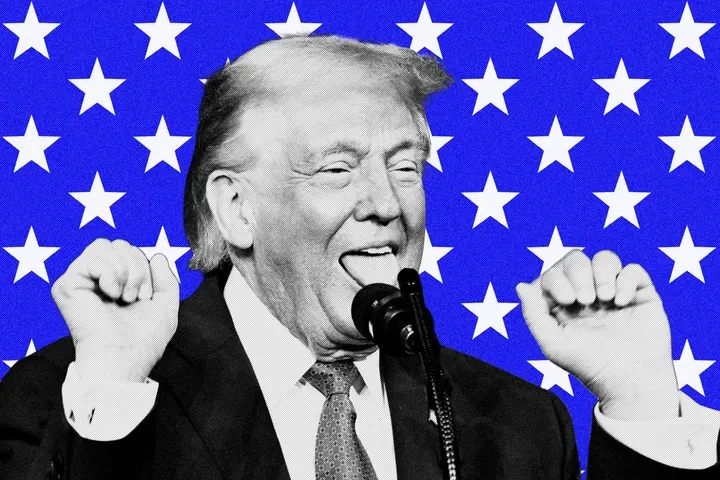
In fact, the confluence of three major events unfolding this week—Trump’s rambling, nearly two-hour celebration of his first year back in office; the tense, defiant gathering of rattled global elites in snow-covered Davos; and the public move by Denmark and its European allies to boost military deployments to Greenland explicitly to deter a U.S. seizure—will likely one day be remembered as the official death knell of the post-WWII rules-based international order that has kept the peace for 80 years.
In just the first three weeks of 2026, Trump’s unhinged, “Mad King” style rants about Greenland have spiraled into something far more shocking and alarming: the world’s most powerful superpower is actively choosing to burn through its remaining global goodwill and alliances, chief among them NATO—the most consequential geopolitical alliance in human history. This comes at the exact moment NATO had been reinvigorated, expanded, and grown stronger than ever after Russia’s 2022 full-scale invasion of Ukraine.
Trump’s obsession with Greenland is as inexplicable and personally driven as any off-the-wall side project any U.S. president has ever chased. Seizing control of a Danish territory home to just 57,000 people, most of its land buried under a mile of ice, is not a longstanding conservative core belief. It’s not a topic taught in international relations courses, nor even a talking point pushed by the most extreme far-right media outlets. Wall Street has never spent decades lobbying or coveting this acquisition. There is no well-funded, astroturfed lobbying campaign pushing for “Build Green in Greenland” operating out of Capitol Hill, no grassroots Greenlandic independence movement whispering to D.C. power players at cocktail parties begging for U.S. annexation, and unlike 19th century America’s Manifest Destiny, there is no flood of American settlers clamoring to homestead the land. None of that applies—quite the opposite.
In reality, given the U.S.’s existing global power and network of alliances like NATO, any American with any sort of interest in Greenland already had full access to it. The U.S. already operates a major military base there, and at one point even had far more installations before choosing to downsize its footprint over the decades. While the territory does hold valuable rare earth minerals, and its position in the quickly warming Arctic could one day open new shorter trade routes, all of these resources would already have been accessible to any American business leader looking to tap into them. Until just days ago, Denmark was one of America’s closest, most reliable allies. Any American who wanted to relocate to Greenland already has done so.
Annexing Greenland is among the least popular policy proposals ever polled in the U.S.: just 17% of Americans back Trump’s push, and a staggeringly low 4% think seizing the territory by military force is a good idea. For context: a 2022 survey found roughly 13% of Americans believe in Bigfoot.
This new imperial ambition from Trump also does not come at a peak of his popular or political support. His approval rating has dropped steadily since he returned to office, and his signature immigration policies are deeply underwater with voters. Headlines have been dominated by revelations of his once extremely close ties to the world’s most infamous convicted pedophile. Democrats are flipping seats and winning office by landslide margins. The Republican House majority is so narrow that Speaker Mike Johnson’s hold on power hinges on unpredictable events like car accidents affecting GOP members from Indiana. Trump has also failed to rally the nation around any grand patriotic cause; he can barely even articulate a coherent vision for his Greenland push. While speaking at Davos this week, he referred to “Iceland” multiple times when he meant Greenland. Hours later, he announced he had reached a “framework for a future deal” with NATO’s secretary-general regarding Greenland and the Arctic—but even if a deal eventually materializes, the damage is already done, and the trajectory of global politics has been permanently shifted.
Pushing to occupy and annex Greenland is a pure product of Trump’s most unhinged, bizarre worldview. He openly admitted as much in a rambling, troubling interview with The New York Times earlier this month. When asked “why Greenland?”, he responded, “Because that’s what I feel is psychologically needed for success.” This is Trump as president fully embracing the worldview he summed up most bluntly in his infamous Access Hollywood tape: “When you’re a star, they let you do it.” A decade on the global political stage has done nothing to dissuade him of that belief. He has repeatedly outmaneuvered and beaten U.S. institutional checks, becoming the first convicted felon ever elected to the Oval Office.
Watching Trump’s push for Greenland is witnessing one of the most extraordinary acts any great power or head of state has carried out in the entire modern era of nation-state politics, which dates back to the 1648 Treaty of Westphalia. It is nearly impossible to find a historical geopolitical parallel. Of course, leaders have made catastrophic choices that ended in ruin—Napoleon’s invasion of Russia, or Austro-Hungary’s actions that sparked World War I—but there is no precedent for a great power intentionally setting out to dismantle the very core sources of its national strength and global influence.
For 80 years, since the end of World War II, the U.S.-led model of innovation, trade, and global economic hegemony was built on six seemingly unshakable principles, consistently upheld by both Democratic and Republican administrations:
Open access to the U.S. for immigrants, particularly for the world’s best and brightest seeking opportunity at America’s unparalleled top-tier universities;
Robust, consistent government investment in higher education, medical research, and scientific laboratories;
Broad, increasingly frictionless access to U.S. markets for global goods, paired with reciprocal access for U.S. products to markets around the world;
Steadfast, unwavering commitment to the rule of law at home, which made the U.S. a predictable, safe place to build businesses and create new innovations;
An equally unshakable network of global geopolitical alliances abroad, which wove a global security blanket backed by the most powerful military in human history.
All five of these pillars supported one final, equally critical sixth pillar:
- Politically independent, fiscally responsible monetary policy that cemented the U.S. dollar as the world’s most reliable reserve currency. This turned U.S. Treasury bonds into the default savings vehicle for the entire world—for both democracies and authoritarian regimes alike—and made U.S. banking networks and capital markets the go-to destination for any company seeking investor capital.
Presidents have long made marginal adjustments to this framework—cutting spending here, increasing investment there—and some even rewrote core parts of it, like Richard Nixon did when he took the U.S. off the gold standard in 1971 and upended the post-WWII Bretton Woods system. But even Nixon understood how the pillars reinforced one another, and he remained committed to a future of steady U.S. global leadership. It is also true that a series of missteps—from the disastrous imperial adventure in Iraq to the 2008 global financial crisis to miscalculations around China’s rise—had already eroded U.S. unipolar power and moral standing from the peak it held on September 11, 2001. But a quarter century after that peak, the U.S. still served as the anchor for global peace, power, and international institutions. It is also worth remembering that after the 9/11 attacks, NATO rallied to America’s side, invoking Article 5 mutual defense protections for the first and only time in its history. Denmark, a close Nordic ally, was such a staunch partner that this tiny country suffered the third-highest per capita death toll fighting alongside the U.S. in Afghanistan and Iraq.
It is impossible to overstate how much security, prosperity, opportunity, and innovation these six foundational pillars created for both Americans and people across the globe. To be clear, America’s 80-year reign leading the global order was not without enormous human cost—felt most sharply by people on the margins of the Cold War, from Vietnam and Cambodia to Africa and Latin America. But nearly every major human achievement of the last 80 years bears the mark of these six U.S. policies, from extraordinary advances in global public health to the dramatic reduction of global extreme poverty to the invention of the internet. Look at nearly any major business success story, and you can trace it back to this framework. Take just one example: immigrants or their children played a foundational role in founding and building all four of the world’s $4 trillion companies: Nvidia, Alphabet, Microsoft, and Apple.
Yet over the past year, Donald Trump has systematically undermined all six pillars in a way that even Putin or Xi could never have dreamed of pulling off themselves. In recent weeks alone, he has inflicted lasting, irreparable damage to the rule of law, U.S. global alliances, and the independence of American monetary policy.
Just in the first three weeks of 2026, we have already seen projections that legal immigration to the U.S. will drop by as much as half. Top PhD programs across the country are warning of collapse after a year of the Trump administration’s assault on science, higher education, and research. Europe and America’s closest trading partners are preparing billions in new tariffs on U.S. exports. Masked federal law enforcement, bearing all the markers of a fascist secret police, have occupied a major American city as Trump launches political investigations into local and state leaders who oppose him. And the chair of the Federal Reserve has issued a stark, public warning about sustained presidential pressure to manipulate U.S. monetary policy.
But the rising costs of Trump’s agenda are most visible in real time when it comes to America’s international friendships. Just look at the comments from global leaders at the annual Davos gathering of global elites: Canadian Prime Minister Mark Carney—leader of America’s closest ally and largest trading partner, whose military is now planning for potential conflict with the U.S. along the world’s longest traditionally unguarded border—received a standing ovation for a speech where he declared, “Let me be clear: We are in the midst of a rupture, not a transition.” European Commission President Ursula von der Leyen similarly called for Europe to achieve strategic independence from the United States.
This is the end of the global order we have known for 80 years—all for reasons that will baffle political scientists and historians for generations. There is no grand strategy behind this act of superpower suicide, only the president’s own narcissism, greed, and frustration at never earning the respect from global elites he craves above all else.
On one level, Trump’s destructive rampage in January lays bare the collective failure of every U.S. institution, safeguard, and check and balance that was supposed to rein in a rogue executive. The most glaring institutional failure is the sheer cowardice of the narrow Republican majority in Congress, which has betrayed the Founders’ core expectation that the legislative branch would defend its own authority against executive overreach, and uphold their oath to the Constitution before loyalty to a partisan president.
Putin and Xi can barely believe their good fortune. In Davos, China is already positioning itself to Europe and the rest of the world as the new leader to pick up the pieces of the American century. Putin, who has poured a generation of Russian blood and treasure into the war in Ukraine, has been given an unexpected reprieve at a moment he least deserved it. He has spent 25 years in power arguing that the “democratic West” is just as corrupt as his own authoritarian regime—and now, day after day, Donald Trump is giving him endless new evidence to back that claim.
Throughout Trump’s first term, conspiracy theorists wondered openly on social media if Trump was a Russian asset. In his second term, we have arrived at an even more horrifying conclusion—one that is far more embarrassing for American voters and far more damning for Trump’s place in history: he is doing all of this entirely of his own free will.
Historian Barbara Tuchman once famously pointed to the grand 1910 funeral of Britain’s King Edward VII—a spectacular, colorful procession of mourning that brought together nine kings, seven queens, and more than 40 other imperial and royal royals—as the high water mark and last gasp of 19th century Europe’s era of global wealth and dominance, before it destroyed itself in World War I and ceded global power to the upstart United States across the Atlantic.
One day, we will similarly tell our children about January 2026 in global politics, and they will never be able to fathom how we did this to ourselves. They will never be able to comprehend what the United States once meant to the world.
Share your thoughts on this piece. Send a letter to the editor at [email protected].