How Fandom Culture Is Rewriting Modern Political Campaign Strategy
Zohran Mamdani never auditioned for Survivor, but one of his closing mayoral campaign ads dropped him straight into the reality show’s iconic Tribal Council. Over roughly 30 seconds, a group of former Survivor contestants spoke directly to camera, explaining their decision to vote Mamdani’s top rival, Andrew Cuomo, off the “island” of Manhattan.
“Didn’t we already vote you out?” one former castmember jokes.
This viral Survivor-themed spot is just one of several fandom-inspired ads Mamdani’s campaign released in the final weeks of New York City’s mayoral race. The ads were built not just to reach general voters, but to meet existing fan communities on their own turf. Mamdani’s campaign is among the first to not only cultivate its own loyal base, but tap into the inherent emotional power of preexisting pop culture fandoms. Modern politics has evolved into a multiverse of competing and overlapping fandoms, and the most successful candidates—like Mamdani—translate their campaign’s core goals into the emotional language these communities already understand.
“We believed, because of the inherently social nature of Survivor, that we could convince more than just one person—we could get everyone talking at their watch party,” says Eric Stern, a Democratic strategist and senior vice president of progressive messaging firm Fight Agency, which developed the ad. “It might spark a conversation, and that could lead a group of people who would otherwise stay home or vote for another candidate to actually become part of the movement.”
Fandom is far more than just enjoying a television show or having a parasocial connection to a celebrity. It centers on belonging to a community of people with shared interests, who trade lore, inside jokes, and universal hero-villain narratives that shape their worldviews. Political movements have long operated along similar lines, but until recently, the digital habits that come with stanning a star like Taylor Swift or editing fan content were reserved exclusively for pop culture figures.
President Donald Trump’s “Make America Great Again” movement proved just how powerfully politics and fandom can blend. Over the past decade, MAGA supporters have done far more than just show up to vote for Trump. They have created custom merch, traveled to campaign rallies like Deadheads following the Grateful Dead, and built elaborate online lore around a supposed deep state cabal that only Trump can dismantle. Trump’s campaign didn’t just build its own fan communities—it absorbed surrounding fandoms, from professional wrestling to gaming culture, to create low-barrier entry points for new supporters to join the movement.
One of the clearest recent examples of MAGA’s cross-pollination with gaming fandom played out in 2024 with early 2000s console gamers. In October, GameStop posted a joking public policy announcement formally declaring the “console wars” (a decades-old meme rivalry between video game manufacturers) over, after news broke that a new entry in Microsoft’s Halo franchise would be cross-compatible with Sony’s PlayStation. Soon after GameStop’s post went viral, an official White House X account quoted the post, claiming that Trump “presided over the end of the 20-year Console Wars”—a nod to the president’s self-branding as the “peace president.”
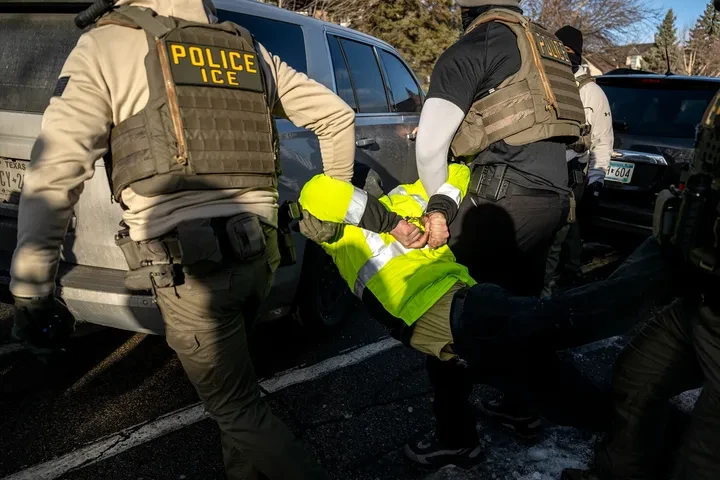
As that viral interaction circulated, the Department of Homeland Security seized the moment to call on its audience to join Immigration and Customs Enforcement to “destroy The Flood.” The Flood, the central villainous faction in the Halo franchise, was being explicitly compared to immigrants. As of this writing, that post has earned more than 100,000 likes.
This new focus on harnessing fandom’s organizing power marks a notable shift away from the influencer-heavy digital strategy that dominated political campaigns over the past decade. When Covid-19 lockdowns forced 2020 campaigns to replace in-person campaigning with online tactics overnight, more and more candidates—including then-President Joe Biden—began streaming with creators and hosting live events on platforms like Twitch. The Biden White House regularly briefed cohorts of political creators on policy issues like student debt and provided them with pre-written messaging to share.
While serving as the Biden White House’s director of digital strategy at the time, Rob Flaherty frequently framed the administration’s influencer partnerships as the solution to an increasingly fractured media ecosystem. “It’s an incredibly fragmented, polarized media environment, and that means we have to go to a lot of different places to make sure people are hearing from the White House and hearing from the president,” Flaherty told NPR in 2022 of the administration’s work with influencers.
But in the years since, this broad reach has rarely translated to genuine resonance. Many of the same podcasters who helped Trump win reelection last year, including comedian Andrew Schulz, have since turned on him, underscoring just how precarious influencer loyalty can be.
What set the Mamdani campaign apart from the traditional influencer outreach of the Biden administration was that the now mayor-elect and his team refused to treat influencers as nothing more than rented megaphones. Instead of chasing creators with massive followings or creators who already focused exclusively on politics, Mamdani’s team sought out people who already shared the candidate’s stated core values—whether that was regular subway riders or night-shift nurses working in Queens’ Elmhurst neighborhood. Because of this natural alignment, collaborations never felt like forced political transactions, but rather organic extensions of the communities both the campaign and creators already belonged to.
“By addressing and engaging with individual communities on their own terms, it allows campaigns to deliver their messages, then step back, and the communities will take that message and build their own lore and narrative around it,” says Kurt Braddock, an American University professor who studies political persuasion and social influence.
In contrast, the Cuomo campaign tried to force its way into internet culture through brute force, courting MAGA creators and hiring meme consultants to churn out pro-Cuomo content in the election’s final weeks. Cuomo’s trend-chasing posts—from memes attacking Mamdani’s resume to AI-generated videos mocking Mamdani’s admiration for former NYC mayor Bill de Blasio—fell completely flat next to Mamdani’s organic, community-aligned content.
“We really were able to engage fans, creators, and stars themselves on a deeper level,” says Stern. “We were able to take the energy generated from these ads and translate that into on-the-ground organizing and online narrative power in a way that massively benefited the campaign.”
Influencers are not disappearing from political campaigns anytime soon, but a fandom-centered approach reframes how their political power works. It is no longer just about a creator broadcasting a pre-written political message to millions of followers—it is about translating that message into the shared language and logic of existing communities. Mamdani’s campaign recognized this early, bringing creators into its fold to help shape messaging, not just distribute it.