2024 Election Cycle Security Spending for U.S. Campaigns Hits Five Times 2016 Levels Amid Surge in Political Threats
A new report released Thursday reveals that federal campaign organizations and political action committees (PACs) spent more than five times as much on security during the 2024 U.S. election cycle than they did in the lead-up to the 2016 presidential race.
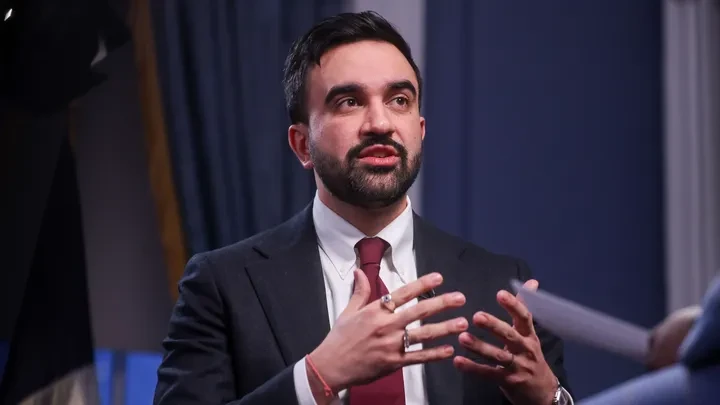
The analysis comes from the Security Project, an initiative under the nonpartisan Public Service Alliance, which ties the massive spending increase to a nationwide surge in violent threats against public officials and their family members at every level of government. Justin Sherman, interim vice president of the Security Project and lead author of the report, called the growing cost of mitigating these threats deeply concerning, noting that it creates unanticipated financial burden for many political candidates.
“No candidate, no matter their party or what part of the country they’re running in, should have to choose between serving the public and keeping themselves or their family safe,” Sherman said.
A recent investigation by the Minnesota Star Tribune underscores just how sharp this rise in threats has become: the paper documented that reported threats against Minnesota State Capitol employees jumped from just 18 incidents in 2024 to 92 in 2025, with 45 more threats recorded in the first two months of 2026 alone. Separate research from the Public Service Alliance found that reported threats targeting the family members of public servants have surged 3,700% between 2015 and 2025. A 2025 Pew Research Center survey also confirmed that an overwhelming share of U.S. adults across the political divide agree that politically motivated violence is growing nationally.
The Public Service Alliance report analyzed 10 years of spending data tracked by the Federal Election Commission (FEC). While a large share of total security spending goes toward protecting in-person campaign events, the report recorded explosive growth in spending on digital security tools and services, including data removal and ongoing online threat monitoring. Across federal campaigns and PACs, total spending on digital security hit just over $900,000 in the 2023–2024 cycle, compared to roughly $184,000 in the same category eight years earlier — a nearly 400% jump.
Spending on security for candidates’ personal residences — including the installation of home alarm systems and perimeter fencing — has also grown sharply, the report found. That category of spending doubled from roughly $130,000 during the 2017–2018 cycle to more than $300,000 in the 2023–2024 cycle.
Sherman notes that gaps in FEC reporting make it hard to determine whether most security spending is proactive planning or a response to a specific received threat. Campaign disbursement forms only require a short description of purchased goods or services, and rarely include additional context about why the security expenditure was made.
At the state level, lawmakers across the country are considering policy reforms that would explicitly allow candidates to use campaign funds to cover security costs for their homes, offices, and personal information while on the trail. Currently, only a small number of U.S. states have laws that explicitly permit candidates to draw on campaign money for security expenses, according to Helen Brewer, senior policy specialist at the National Conference of State Legislatures (NCSL). Brewer said lawmakers in multiple states, from both major political parties, have confirmed a clear uptick in threats and targeted incidents. “People are seeing this problem everywhere they go, which is just a terrible state of affairs,” Brewer said.
Utah State Senator Mike McKell, who has served 14 years in the state legislature while also working as a practicing attorney, has seen this crisis firsthand. In recent years, his private law office was vandalized, and he says colleagues from both parties have faced their own targeted attacks: homes have been damaged, car tires slashed, and other forms of harassment have become common. McKell recently helped pass an election reform bill that explicitly clarifies that candidates and sitting officeholders can use campaign funds to buy security systems for their homes, offices, and places of business (Utah’s legislature is a part-time body). “The part of my bill that I hate the most is the security section — but we need it, because this has been a persistent, dangerous problem in Utah,” McKell said.
Minnesota State Senator Bonnie Westlin is pushing for reform after a violent attack this summer that left one of her colleagues dead. Westlin was among the lawmakers targeted by a gunman who killed Representative Melissa Hortman and Hortman’s husband, Mark. That same night, the gunman also shot State Senator John Hoffman and Hoffman’s wife. This legislative session, Westlin and Hoffman introduced a bill designed to make it easier for candidates to protect themselves. If passed, the legislation would remove candidates’ home street addresses from all publicly available campaign filings, a change that would make it far harder for attackers to stalk and target public officials. The gunman who killed the Hortmans was reportedly found with handwritten notes listing multiple lawmakers’ names and home addresses. The bill would also allow candidates to spend money on home security upgrades without those purchases counting against their legal campaign spending limits.
Beyond changes to campaign finance rules, NCSL launched a new grant fund in February that allows states to allocate funding for lawmakers to invest in personal security measures. The funding must be distributed equally to every legislator regardless of political party, and can be used for costs like online privacy monitoring services or self-defense training, according to Katie Zeigler, NCSL’s associate director of outreach and engagement. “We’ve seen an outpouring of interest and gratitude from the legislators we’ve connected with about this fund,” Zeigler said.
“It breaks my heart that we’ve reached a point where running for office can mean risking your life — and for Mark and Melissa, it actually meant losing their lives,” Westlin told WIRED. “That is not what public service should ever require of anyone. We are all here to do work for our communities and our state.”