Who’s Who of Potential Trump Attorney General Picks Are All Well-Known Election Deniers
On a Monday afternoon "election integrity" call organized by conservative podcaster Steve Stern, a roster of prominent election deniers gathered to rehash years-old false conspiracies about rigged elections and compromised voting machines.
Calls like this have been common in right-wing circles for years, but this latest event diverged sharply from similar gatherings I monitored in 2021 and 2022. Those earlier calls were dominated by little-known grassroots activists largely shouting to an empty audience; this one was packed with figures allegedly tied to Donald Trump’s 2020 effort to overturn the presidential election, who claim they still have the former president’s ear as he works to undermine U.S. democratic election systems.
With Trump set to name a new permanent attorney general following his decision to fire Pam Bondi last week, several of these call participants say they have already weighed in on the selection process.
Many speakers on the call complained that even with Trump back in the White House, the Department of Justice has failed to deliver sweeping changes to U.S. election administration — an issue that, per the U.S. Constitution, falls under the authority of individual states and Congress, not the federal Department of Justice.
“The fact that this stuff isn't being investigated and prosecuted to the fullest extent possible” — the “stuff” referring to unproven claims of rigged voting machines — “is deeply troubling to me, because it means that some folks on our side or purportedly on our side, are literally doing drop, block and tackle,” said John Eastman, the legal architect of Trump’s 2020 overturn effort who now serves as a senior fellow at the influential far-right Claremont Institute, during Monday’s call.
Disgraced former national security adviser Michael Flynn echoed Eastman’s frustration, adding, “We just wasted a year of not getting to what the Department of Justice should have been getting to,” before labeling current DOJ personnel “Deep State goop.”
In reality, the DOJ has already worked aggressively to erode public trust in U.S. elections: the department has filed dozens of lawsuits against states demanding they turn over unredacted voter rolls, and has gutted the widely respected voting section of the Civil Rights Division. Experienced career attorneys in the unit have been replaced with Trump loyalists who openly spread election denial conspiracies. Still, Flynn and other attendees remained unimpressed by the department’s progress to date.
“Pam Bondi was terrible, no arrests of terrible Deep State and Democrat thieves, and frauds and traitors, no arrests of any kind,” said Wayne Root, a right-wing radio host who previously pushed the false birther conspiracy against former President Barack Obama. “We’ve got to change that. I hope he comes up with the right attorney general. I've given him some good suggestions.” Root claimed he urged Trump to fire Bondi shortly before her ouster.
Root also claimed on the call that he sent a text to Trump last month urging him to sign an executive order restricting mail-in voting, and that Trump signed the order just days later. Root declined to tell WIRED whether Trump responded directly to his message. “The President is the only one who decides if and when to sign an Executive Order,” White House spokesperson Abigail Jackson told WIRED.
Every top candidate tipped to replace Bondi permanently, including those on Root’s shortlist, has well-documented, longstanding ties to promoting election denial conspiracies.
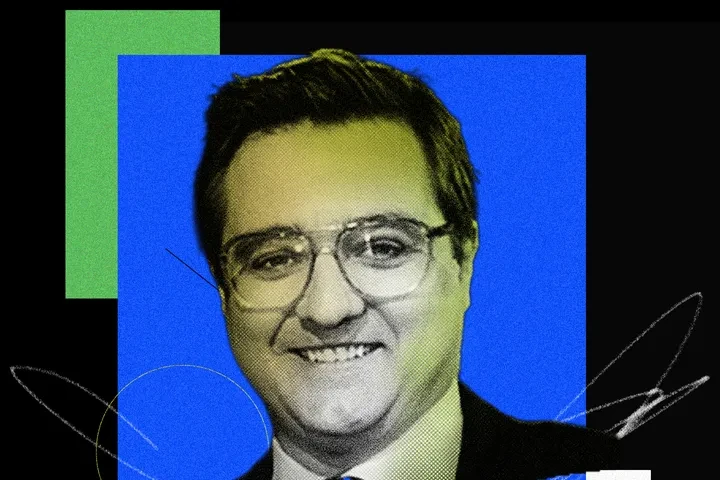
Current acting Attorney General Todd Blanche, who served as Bondi’s deputy before taking the acting role, is deeply familiar with and aligned with Trump’s false claims of a rigged 2020 election. Before joining the DOJ, Blanche worked as Trump’s personal attorney, serving on legal teams that defended the president against charges related to the Stormy Daniels hush money case, the classified documents retention scandal, and federal 2020 election obstruction charges.
Blanche has also recently signaled that if appointed permanent attorney general, he would have no issue deploying ICE agents to police polling places during the 2026 midterm elections.
“Why is there objection to sending ICE officers to polling places?” said Blanche during an appearance at the Conservative Political Action Conference last month. “Illegals can’t vote. It doesn’t make any sense.” Blanche has amplified the false claim that widespread noncitizen voting occurs in U.S. elections, praised the DOJ’s effort to build a national voter roll database, and criticized judges and states that have blocked the initiative. A 2017 study found noncitizen voting is extremely rare, accounting for just 0.0001 percent of all votes cast across a dozen states in 2016.
The New York Times has also named current Environmental Protection Agency Administrator Lee Zeldin as a leading candidate for the permanent attorney general post.
Back in 2021, Zeldin was one of the House Republicans who voted against certifying 2020 presidential election results for Arizona and Pennsylvania. Just hours after the January 6 Capitol riot, Zeldin maintained his support for Trump’s baseless election conspiracies. “This debate is necessary because rogue election officials, secretaries of state and courts circumvented state election laws,” Zeldin said on the House floor during a speech opposing the certification of Arizona’s electoral votes. “These acts, among other issues, were unlawful and unconstitutional.”
Zeldin also signed an amicus curiae brief supporting Trump’s legal team’s Supreme Court lawsuit contesting Biden’s 2020 victory. In 2022, while running for New York governor, the New York State Board of Elections disqualified more than 13,000 signatures submitted by Zeldin’s campaign after finding most were duplicate entries, barring him from appearing on multiple party lines in that year’s election.
While Zeldin and Blanche are the clear current front-runners for the role, several other candidates remain in the mix, all of whom would be enthusiastically welcomed by the election denial movement.
Jeanine Pirro, currently the top federal prosecutor in Washington, D.C., is best known as a former Fox News host who spread baseless 2020 election conspiracies. That track record led Dominion Voting Systems to name her in the complaint for its defamation lawsuit against the network, which Fox ultimately settled for $787.5 million (Pirro was not named as a defendant in the suit). She has also repeatedly defended people charged in the January 6 insurrection.
Texas Attorney General Ken Paxton, labeled the state’s “election denier in chief” by the Texas Tribune, has also been floated as a potential pick. Paxton filed lawsuits seeking to overturn 2020 election results in four key swing states, continued his anti-voting agenda during the 2024 election by suing to block a new voter registration effort in Travis County, and has most recently been accused of targeting organizations that register Latino voters across Texas.
Another possible candidate is Senator Eric Schmitt, a former Missouri attorney general who led the 2020 push to convince Republican state attorneys general to back Paxton’s Supreme Court lawsuit seeking to throw out 2020 election results. Schmitt successfully recruited 16 other state attorneys general to sign onto the effort. He has also worked closely with the White House to draft the anti-voting SAVE America Act, legislation that would disenfranchise tens of millions of American voters.
Utah Senator Mike Lee is another longshot contender for the post. Lee, who strongly supported overturning the 2020 election results, has also become a prominent public advocate for the SAVE America Act.
Blanche, Zeldin, Pirro, Paxton, Schmitt, and Lee did not respond to WIRED’s request for comment.
Joe Hoft, a writer for the conspiracy-focused right-wing website Gateway Pundit, told attendees of Monday’s call that whoever takes the attorney general role must prioritize delivering a Republican win in the 2026 midterms.
"It matters, because this first year is not satisfactory,” said Hoft. “We all want much more. And what we're learning is that we don't know if we're going to get it all fixed right now, but if we can win this election, then we can get stuff done. So everything, all our effort, needs to be on this election process.”
This is an edition of the Inner Loop newsletter. Read previous newsletters here.