The Last War of the 20th Century: Understanding Trump’s Venezuela Raid in Context
Donald Trump is far from the first U.S. president to target territorial and political gain south of the American border. Over the past century, no less than a dozen of his predecessors shared the core conviction that unlocking both democracy and profit in Latin America was just one successful coup away. But the specific strain of imperial ambition Trump unleashed over the weekend with his military raid in Venezuela is both deeply atavistic and uniquely Trumpian—one that shows no signs of fading any time soon.
Within hours of U.S. special forces’ bold seizure of Venezuelan leader Nicolás Maduro, Trump’s public justification had already shifted from vague rhetoric about advancing democracy and cracking down on narcotics to a blunt admission of the end goal: seizing control of the country’s massive oil reserves. “We’re in charge,” Trump told reporters. “We’re going to run everything. We’re going to go in and fix it.” Even before Maduro appeared in a New York City courtroom on Monday, Trump was already celebrating what he has dubbed his “Donroe Doctrine.” During a Sunday press gaggle on Air Force One, he explicitly threatened half a dozen other nations, ranging from Colombia and Cuba to Mexico and even Denmark’s autonomous territory of Greenland.
While this moment feels like a dangerous new turn for Trump’s authoritarian regime—his actions in Venezuela violate both international and U.S. law, and were carried out without any consultation with Congress—it is critical to place this move in broader context. The long history of U.S. intervention in the region, paired with Trump’s unique approach to governance and his stubborn fixation on the America of the 1980s, makes clear that Trump may be launching what future historians will one day call the final war of the 20th century. Three core principles help explain how the U.S. arrived at this point just days into the new year, and why Saturday’s shocking breaking news was far from unpredictable:
1. The U.S. excels at coups, but fails at everything that comes after
For a full century, two defining patterns have shaped every U.S. intervention in Latin America: quick, successful tactical military wins, and catastrophic long-term strategic failure. These dual threads are woven deep into American political DNA. Take E. Howard Hunt, for example: long before he was indicted for his role in the Watergate break-in and 1972 election interference, he built his career as one of the CIA’s most prolific government-overthrow specialists.
In the early 1950s, the powerful United Fruit Company grew alarmed at land reform plans from Guatemala’s democratically elected president Jacobo Árbenz, and convinced both the Truman and Eisenhower administrations that the new Central American leader could align with the Soviet bloc. The CIA, founded just a few years earlier in 1947, was still new to meddling in Central and South America—but the U.S. was not. Long before the 1950s, the U.S. had repeatedly occupied the region: it held Nicaragua on and off from 1912 to 1933, invaded and occupied Haiti from 1915 to 1934, and occupied Cuba twice (first from 1906 to 1909, then again from 1917 to 1922), all to protect U.S.-owned sugar plantations.
Hunt, a mid-tier spy stationed in Mexico City who had helped recruit a young up-and-comer named William F. Buckley Jr., got a major career boost when he helped lay the groundwork to topple Árbenz. “What we wanted to do was to have a terror campaign to terrify Arbenz particularly, to terrify his troops,” Hunt recalled decades later. The 1954 coup was one of the CIA’s few successful overthrows that decade, so Hunt was a natural pick for the agency’s next big project: planning the Bay of Pigs invasion of Cuba.
A critical, ultimately fatal difference from past 20th century interventions was that this time, to overthrow Fidel Castro’s government, the U.S. relied not on its own Marine Corps but on a force of Cuban exiles. Hunt was put in charge of assembling a U.S.-friendly provisional government that would take power once the CIA-trained invasion force ousted Castro. The invasion, launched just weeks after John F. Kennedy took office, failed catastrophically. More than 100 exiled fighters died on the beaches when promised U.S. air support never materialized, and within days, 1,200 more were captured, with hundreds later executed.
The Bay of Pigs fiasco did nothing to curb the CIA’s hunger for regime change in Latin America. In 1961, the agency supplied weapons to assassinate the Dominican Republic’s leader. That same year, it backed a coup in Ecuador—then, when the new leader turned out to be even less friendly to U.S. interests than the ousted government, it supported a rival junta in a second 1963 coup.
In the decades that followed, the CIA backed more coups in Brazil (1964) and Chile (1973), and propped up armed uprisings and right-wing rebel groups across the region (see: the Iran-Contra scandal). Most presidential administrations pushed for even more aggressive intervention than they ultimately carried out; Ronald Reagan’s secretary of state Alexander Haig begged Reagan to green-light an invasion of Cuba, telling him: “You just give me the word. I’ll turn that fucking island into a parking lot.”
In nearly every U.S. intervention across the Western Hemisphere, the outcome after U.S. meddling was far worse than the status quo that preceded it. Chile’s democratically elected socialist Salvador Allende was replaced by Augusto Pinochet’s brutal 17-year military dictatorship, for example. (This pattern holds even for 21st century interventions like Iraq and Afghanistan.) After the U.S. gave tacit backing to a 1976 coup in Argentina that ousted Isabel Perón, a brutal military junta ruled for decades, refining atrocities like throwing dissidents from helicopters into the Atlantic.
Much of the region’s long history of instability and authoritarian rule was enabled by U.S. military training for elite Latin American officers. The U.S. Defense Department trained tens of thousands of Latin American military, intelligence, and law enforcement officials at its infamous School of the Americas in Georgia. A Duke University investigation found that many of these alumni went on to be accused of horrific human rights abuses, becoming “dictators, death squad operatives, and assassins.” That list includes Manuel Noriega, Bolivian dictator Hugo Banzer Suárez, Haitian dictator Raoul Cedras, Pinochet’s head of secret police, and even the general who served as Maduro’s defense minister over the weekend, among the school’s so-called “Hall of Shamers.”
For decades, U.S. presidents justified these interventions and their support for dictators through the lens of the Cold War, arguing that backing brutal regimes was better than risking them falling to communism. Ironically, it is the very skill and reliability of the U.S. military and intelligence community at pulling off these quick tactical wins that makes intervention so tempting for presidents from Eisenhower to Reagan to Trump. It’s always easy to win in the short term: you depose, overthrow, or abduct the sitting leader. What comes next is always a roll of the dice.
But the unplanned long-term consequences of these interventions have rippled through American domestic politics for decades. Their second and third-order effects have shaped modern U.S. politics far more than most Americans realize.
Some connections are obvious: it was during Bay of Pigs planning that Hunt met the four Cuban exiles he would later recruit to break into the Watergate offices. Other connections are less visible: most notably, U.S. meddling in the “Northern Triangle” of Honduras, Guatemala, and El Salvador unleashed destabilizing forces that drove waves of migration north to the U.S. border. Millions of these migrants arriving over the past decade stoked nativist fears that helped elect Trump to the presidency in 2016, and return him to the White House in 2024. Many were driven north after climate change and deforestation wrecked local agriculture and collapsed rural economies; much of that destabilizing deforestation in places like Guatemala came after the military burned highland regions to flush out rebel hideouts. As Jonathan Blitzer outlines in his award-winning book Everyone Who Is Gone Is Here, which examines U.S.-Latin American migration, after the 1980s Salvadoran Civil War—a conflict Reagan called “the front line of the battle that is really aimed … at us”—more than a quarter of El Salvador’s population ended up resettling as refugees in the United States.
2. Donald Trump has no endgame plan
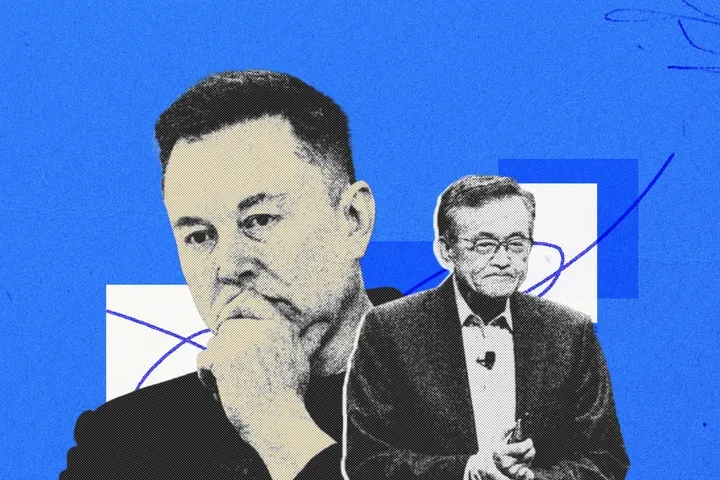
Back in November, amid a U.S. military campaign of lethal strikes on suspected drug-smuggling boats off Latin America’s coast—strikes that killed more than 100 people and are illegal by nearly every international standard—I interviewed former Ambassador John Bolton at the Texas Tribune Festival. Bolton, the hawkish neoconservative who served as Trump’s longest-serving first-term national security adviser, has pushed for regime change in Venezuela for decades, and worked to support opposition efforts to oust Maduro during Trump’s first term. He told me: “I think that our failure to overthrow Maduro in the first term was our greatest failure.” (Many of those first-term efforts were shockingly clumsy, as a WIRED investigation by Zach Dorfman later revealed.)
Even so, Bolton said he has been baffled by how little groundwork Trump laid for the recent Maduro operation over the past several months. The boat strikes came with no effort to win buy-in from Congress, nor even to build deep alliances with Venezuela’s own opposition. (Over the weekend, Trump casually brushed aside leading Venezuelan opposition figure María Corina Machado, who was nominated for a Nobel Peace Prize last fall; The Washington Post reports she was sidelined specifically because of that nomination.) “There’s just no comprehension, I think, of what it takes to replace the Maduro regime,” Bolton said.
The core problem, Bolton explained, is that Trump never thinks more than one step ahead. The veteran Washington insider, who helped architect the 2003 Iraq War, told me the hardest thing to grasp when he worked in the Trump White House was that Trump has no consistent worldview, no fixed policy positions in the traditional sense. Every decision is transactional and temporary.
“He doesn’t do grand strategy,” Bolton told me. “It is very hard for people to understand. It was very hard for me to understand, because you think in government that’s what it’s about—policy is what you do. That's not what Donald Trump does. Therefore, when people talk about a Trump doctrine in international affairs, it’s a complete fantasy to think that there’s any coherence to it at all. It’s all through the prism of what benefits Donald Trump … He wanted to do what he wanted to do.”
Trump frames every decision around winning the next news cycle, and almost never plans beyond that. The fact that there is no visible plan for what comes next in Venezuela—for today, this week, next month—is no accident. That lack of planning is not a bug of Trump’s governing style; it is a feature.
3. This conflict, no matter the outcome, is rooted in the past, not the future
Some political analysts have long argued that Trump’s worldview is frozen in the 1980s and early 1990s: his formative years as a New York real estate tycoon during the booming Reagan era solidified his politics, his icons (he frequently cites Lee Iacocca as a business hero), his definition of success (gilded excess across the board), and his policy preferences (including protectionist tariffs). Even his signature “Make America Great Again” slogan was first used by Ronald Reagan.
This 1980s fixation makes Trump’s operation to capture Maduro and topple his government far easier to understand: this is less a 21st century conflict, and more a retro, nostalgic campaign—the last war of the 20th century.
We know what 21st century warfare looks like: drones have revolutionized battlefields in Ukraine, and the U.S. military is retooling to operate nimbly in the Pacific in the event of a Chinese invasion of Taiwan. The Venezuelan operation, codenamed Absolute Resolve, which killed dozens of people on the ground, has already been widely compared to the 1989 U.S. invasion of Panama, Operation Just Cause, which captured dictator Manuel Noriega. Like Maduro, Noriega—who was backed by the CIA before the U.S. turned against him—was brought to the U.S. to stand trial. His prosecution was led by Robert Mueller and Bill Barr, who were top officials in George H.W. Bush’s Department of Justice at the time.
But the world has changed dramatically since 1989, and Trump has failed to think through what comes next, creating a bitter irony: the U.S. went to war over oil that it is not clear anyone actually needs, even today. Trump, stuck in his 1980s mindset, still champions gas-guzzling vehicles, panders to the coal industry, and reversed U.S. policy to roll back support for solar energy, even as the rest of the world is rapidly moving away from fossil fuels entirely. Renewable energy production has grown by nearly 30% annually in recent years, and in the first half of 2025, renewables generated more electricity globally than coal for the first time in history. China is scaling up renewables at a breakneck pace: in 2025 alone, it added roughly 360 gigawatts of new solar and wind capacity—more than the total installed wind and solar capacity the entire U.S. has. That puts China on track to cut its carbon emissions even as its economy continues to grow. Global energy prices have fallen so fast that Australia announced in November that it will provide every resident with three hours of free electricity every day starting this year.
Invading a country for its oil in 2026 will one day be seen as just as anachronistic as the 19th century U.S. push to seize dozens of small islands rich in bird guano, a critical ingredient for early agricultural fertilizer. Yet history shows that empires rise and fall over what modern gamers would call “side quests,” and these small, seemingly outdated campaigns lay the groundwork for larger expansion. As Daniel Immerwahr outlines in his book How to Hide an Empire, the global push to claim guano-covered islands first laid the legal groundwork for the United States to expand beyond the North American continent. Within a few years, the U.S. was regularly intervening in Latin America.
For Trump, who only cares about short-term gains, controlling Venezuela’s oil still equals easy profit. What should worry Americans and people across the globe most is that Trump has been openly clear about his broader ambitions in his second term. During his first term, many pundits argued that you should take Trump seriously but not literally; a defining feature of his second term is that the world and Washington need to take him both seriously and literally. In that context, when the podcaster wife of top Trump aide Stephen Miller posted a photo of Greenland draped in the U.S. flag on X, it should be read less as a joke and more as a highest-alert warning for Europe.
Greenland and Venezuela share at least one troubling common trait: both hold massive natural reserves that Trump’s circle of oligarchs are eager to access and profit from. It has been centuries, since Andrew Johnson purchased Alaska, that a U.S. president has looked north for territorial conquest. But Trump’s ambition is clearly far larger than repeating the foreign policy mistakes of his 20th century predecessors.
For an administration building its legacy around upending the global order to create short-term profit for an inner circle of family members, political allies, and cronies—a dynamic WIRED dubbed the “enshittification of American power” last summer—Venezuela’s oil and Greenland’s rare earth minerals are more similar than they are different. The oil executives and tech billionaires coveting these resources have far more in common with 20th century tycoons like United Fruit and the sugar barons than they may care to admit.
Share your thoughts on this article. Send a letter to the editor to [email protected].