The Silent Truth: How On-Ground Journalists Defy Blackouts to Bear Witness
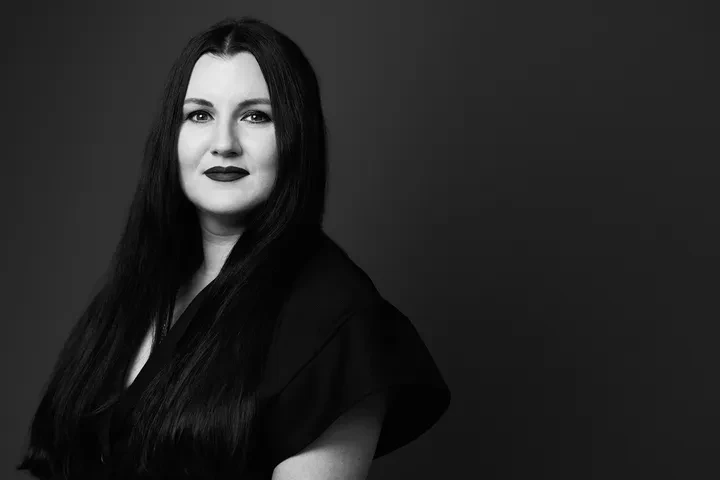
To millions of people around the world, Plestia Alaqad is more than just a familiar face on a screen: she is a young Palestinian journalist, clad in a press vest and helmet, standing amid the flattened rubble of Gaza, speaking directly to camera between Israeli airstrikes. And she is far from alone in this dangerous work.
The weight of bearing witness and documenting the war in Gaza has fallen almost entirely on Palestinian reporters. Since October 2023, Israel has barred nearly all international journalists from entering the territory to cover the conflict. Only in extremely limited cases have small numbers of reporters been allowed in, under strict Israeli military supervision and escort.
It is through social media that reporters like Alaqad have been able to reach global audiences by the millions, a shift widely credited with turning the tide of public opinion on the conflict outside the Middle East. “We’ve all seen just how powerful social media can be, and we’ve witnessed that firsthand amid the genocide unfolding in Gaza, Palestine,” Alaqad says. “That change comes from us, citizen journalists on the ground, using these platforms to show the world what is actually happening here.”
Nearly two years after hostilities reignited, local authorities count more than 72,045 Palestinians killed in the conflict. An independent United Nations commission of inquiry has since concluded that Israel has committed acts of genocide in Gaza, a finding the Israeli foreign ministry has dismissed as “distorted and false.” For Alaqad, the crisis is not just a Palestinian issue—it is a test of what kind of world the global public is willing to accept. “What is happening in Iran, the Congo, Sudan—none of these atrocities should be accepted,” she says. “None of us should accept living in a world where violence against civilians is allowed to stand.”
Half a world away in Iran, a full media blackout imposed on January 8, 2026 has cut off 90 million Iranians from the rest of the world, amid a nationwide wave of mass protests. “Nearly every form of communication was completely shut down: internet, Wi-Fi, cellular service, phone calls,” says Jonathan Dagher, head of the Middle East desk for Reporters Without Borders (RSF). “Even the tools Iranian journalists had long relied on to bypass government restrictions were knocked offline.”
Iranian Foreign Minister Abbas Araghchi told reporters in January the blackout was implemented “after we confronted terrorist operations and learned coordinating orders were being sent from outside the country.”
Protesters have turned to illegally operated Starlink terminals to share footage of the government crackdown with global audiences, but the near-total lack of connectivity has made verifying the final death toll nearly impossible. Current estimates range widely, from 3,000 to 30,000 people killed in the state response.
Alaqad argues that because legacy mainstream outlets curate what they show their audiences, losing independent on-the-ground reporters means losing large chunks of the full truth. “When people are silenced and censored, when they have no space to speak, no platform to share what they are experiencing so that the world can see events through their eyes, there will always be hard limits on what we can know,” she says. In every crisis, when communication falls silent, accountability vanishes—and injustice becomes far easier to ignore. “Injustice is already extremely loud,” Alaqad says. “Justice has to be louder.”
Targeted
For many journalists, silencing is permanent. In a December 2025 report, RSF recorded 67 media professionals killed around the world that year, 43 percent of them killed in Gaza by Israeli armed forces. Since October 7, 2023, the total number of journalists killed in Gaza has climbed to more than 220, per RSF data; the United Nations puts the number even higher, at over 260.
“When you look at the full picture: more than two years into this war, foreign journalists are still banned from entering Gaza, movement of Palestinian journalists inside Gaza is heavily restricted, and we are seeing an unprecedented massacre of members of the press,” Dagher says. “The targeting of media offices and communications infrastructure is just another piece of a deliberate strategy to impose a full media blackout on Gaza.” Israel has repeatedly denied claims that it intentionally targets journalists or media infrastructure.
“Killing journalists means killing and silencing the truth,” Alaqad says. From her own experience, this deliberate targeting works on multiple levels: not only does it reduce the number of reporters on the ground sharing information, it also frames journalists as a threat to the communities they serve. “This also sends a message to ordinary people: all journalists are a threat, don’t talk to them, stay away,” she explains.
She remembers her own mother begging her not to wear her marked press vest and helmet. While the gear is meant to signal neutrality and protect reporters in conflict zones, for Alaqad, it only made her feel like a marked target. “It’s supposed to protect you, but instead, it actually puts your life at risk—and even the lives of your loved ones and the people around you,” she says.
It was not always this way, Alaqad recalls. Early in the conflict, Palestinians would greet reporters, share meals with them, and thank them for their work. “After a few months, once they saw journalists being deliberately targeted over and over, Palestinians began to treat us differently,” she says.
Reporting from Gaza means working in a landscape where even the promise of tomorrow is unstable, no future is guaranteed. Plans rarely stretch past daylight. Conversations cut off mid-sentence without warning. Family homes turn into memorials overnight. “The only certainty in Gaza is uncertainty,” Alaqad says. She still remembers planning to return the next day to follow up with families she had interviewed, only to find they had been killed in an airstrike before she could come back.
Alaqad has since left Gaza, and is now pursuing a master’s degree in media studies at the American University of Beirut. She was awarded the Shireen Abu Akleh Memorial Endowed Scholarship, named for the iconic Palestinian journalist killed by Israeli forces in May 2022.
Digital Truths
Going viral on social media allowed Alaqad to reach millions of people worldwide, but that visibility came at a steep personal cost. “It showed millions of people around the world what is actually happening in Gaza, but at what cost? Being a journalist in Gaza can cost you your life,” she says.
Even with the global reach of digital reporting, Alaqad doubts its long-term permanence. Accounts get taken down, posts get removed, videos disappear from platforms without a trace. Content that is visible today can be gone tomorrow.
This makes digital reporting both incredibly powerful and deeply precarious. When connectivity holds, it can bring global audiences closer to the lived reality of people in crisis than any other platform. When it is cut off, as it was during Iran’s nationwide blackout, entire crises risk fading into obscurity and uncertainty. “What this looks like in practice is that we hear rumors of massacres happening in Iran, but we have no way to confirm casualty numbers, collect firsthand testimonies, get photos or raw footage,” Dagher says.
Without on-the-ground images and witness testimony, even large-scale violence can remain unverified, contested, or simply ignored by the global public. “We lose the voices of the people on the ground, and we lose the truth,” Alaqad says.
She is deeply critical of mainstream legacy media, which operate with their own editorial agendas and pick and choose which stories to elevate. At the same time, social media posts are subject to content moderation and opaque, unaccountable algorithms. Dagher notes that social media tools “are not free from any form of political control. They are still tools in the hands of powerful actors with political and financial interests.”
Even so, Alaqad argues, it is better than the alternative of total silence. “At the end of the day, I believe the power of the people is far stronger than any algorithm or any censorship,” she says. “If people decide this message needs to be seen by everyone, they will keep sharing it, and it will spread.”
This visibility, she says, only matters if the people most affected get to tell their own stories. “I want us to talk about us,” Alaqad says. “Not other people speaking over us.”
She still believes everyone has a responsibility to speak up about crises unfolding around the world, no matter where they are from. “It’s good to have people from different nationalities amplifying our voices, but they should not speak for us or replace our voices,” she says. “I really want future generations to read about the genocide in Gaza through the eyes of the people who lived it.”
Alaqad holds herself to this same standard. “When I was in Gaza, I had access, I was on the ground, I reported firsthand what I was seeing,” she says. “But now that I am not physically there, I always make a point to talk directly to people on the ground, amplify their voices, and give them space to speak—never to speak over them.”
Narratives shared online do not always just disappear into endless social media feeds. Sometimes, they take root and travel in unexpected ways. Alaqad recalls visiting a small town in Switzerland, where she complimented a local woman wearing a kuffiyah. The woman, who did not recognize Alaqad, stopped to explain what the scarf meant to her and why she wore it. That small moment was proof that testimony travels, turning a familiar face on a screen into a story carried across borders.
“These small moments, they do give me hope,” Alaqad says.
This article was originally published on WIRED Middle East.