China’s Battery Giants Are Going Global. Who Benefits From Their Boom?
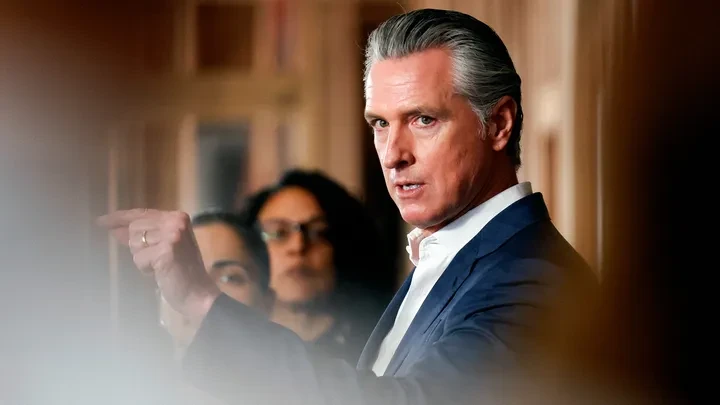
Last June, the symbolism of Emmanuel Macron’s appearance in the northern French city of Douai could not have been clearer. Standing surrounded by factory workers, the French president held a sleek new lithium battery in his right hand and a traditional coal mining lamp in his left. Douai’s industrial history stretches back to 1700s coal extraction, but today it hosts a cutting-edge battery factory—one that will allow France to manufacture every component of electric vehicles within its own borders. For Macron, this facility represented nothing less than the start of a new “economic and ecological revolution.”
Macron was quick to acknowledge France did not deliver this project alone. “We brought in investors from the other side of the world. They transferred their technologies. They helped train our people,” Macron said, gesturing to the man beside him.
That man was Zhang Lei, founder of Envision, a leading Chinese clean energy firm that produces wind turbines and lithium batteries. Envision’s battery division is investing up to €2 billion in the Douai factory, and more critically, contributed the specialized expertise needed for efficient large-scale manufacturing. After the speech, Zhang and Macron signed their names on the first battery rolled off Douai’s production line. “Thank you, Chairman, because you trusted us and because you did exactly what you said you would do,” Macron told Zhang directly.
In 2026, geeking out over batteries at social gatherings is completely acceptable. Lithium battery technology has turned intermittent solar and wind power into reliable 24/7 energy sources. Battery-powered EVs are upending the multi-trillion-dollar global auto industry, and helped make Elon Musk the world’s richest person. The innovation even earned a Nobel Prize, and the U.S. government now formally classifies lithium as a critical mineral.
The global lithium boom has lifted a small group of players higher than any other: China’s cohort of major battery manufacturers. After decades of low-key steady growth, firms like CATL, BYD, Gotion High-Tech, and Envision are now the primary suppliers for the world’s electric vehicles and energy grid storage. Per 2024 data from the International Energy Agency, more than 80 percent of the world’s battery cells are produced in China. Today, these companies are expanding aggressively beyond China’s borders. Over the past decade, they have built or announced plans for at least 68 factories outside the country, according to data compiled by WIRED and Rhodium Group, a New York-based think tank.
Altogether, these overseas factories represent more than $45 billion in global investment, per Rhodium Group’s analysis. They also mark a dramatic shift in what “Made in China” means to the world. For decades, the label was—and often still is—tied to cheap labor, counterfeit goods, and low-cost consumer gadgets. Now it also stands for cutting-edge, industry-leading technology assembled anywhere across the globe.
“We believe it’s a new phase. We have never really seen that in Chinese overseas investments,” says Armand Meyer, a senior research analyst at Rhodium Group. According to his team’s calculations, 2024 was the first year Chinese EV and battery companies spent more money building factories outside China than within. “They are ready to compete globally, and they are as competitive as traditional Western players, or even more competitive,” Meyer says. “We think it’s just the beginning.”
Today, some of the world’s best battery research comes from Chinese universities and companies, says Brian Engle, chairman of NAATBatt International, a U.S. trade association for the battery industry. That advantage stems from early, long-term bets on the technology that China made decades ago.
When Engle toured a lab at one of China’s top engineering schools in 2019, he saw more than 60 graduate students focused exclusively on building and testing battery cells. Surprised by the scale, he asked an American academic on the tour how many U.S. universities would have to pool their battery programs to match that number of battery-focused postgraduates. “And she said we couldn’t,” he recalled. “We simply couldn’t.”
It comes as no surprise that Chinese battery companies dominate the global market, and competition between them within China is fierce. These days, local investment incentives and lower regional shipping costs mean opening a factory overseas can deliver higher profits than manufacturing at home and exporting. CATL, the world’s largest lithium battery maker, recently reported in a financial filing that it holds a 29 percent profit margin on overseas operations, compared to nearly 23 percent in China. Other Chinese companies, including Gotion and EVE Energy, have also reported higher profit margins for their international projects.
Macron is far from the only politician to celebrate the arrival of a Chinese battery plant. The warm welcome is nearly global: Brazil’s Luiz Inácio Lula da Silva rode in a BYD vehicle alongside the company’s founder. Spain’s prime minister has appeared publicly with CATL’s CEO to mark new investments. In the U.S., Illinois governor JB Pritzker shared a stage with Gotion’s chairman to announce the firm’s new factory in Manteno, Illinois.
But problems emerge as blueprints turn into operating factories. Projects almost always include promises to hire local workers, but in some cases companies have brought in migrant labor from abroad. In Hungary, local media reported in July that CATL laid off more than 100 employees at its local factory, most of them Hungarian citizens, prompting the municipality to launch an investigation and raid the plant. CATL also faces protests and a lawsuit in Hungary over its water use and environmental impact—issues that are common to large battery factories worldwide, but amplified by scrutiny of foreign investment.
The dynamic will sound familiar to many. When Apple built its global technology empire relying on Chinese factories, the world debated whether China was benefiting from Apple’s success or being exploited by it. Now, as China’s battery technology takes over global supply chains, Chinese companies are the ones at the center of that same question: who ultimately benefits from this new wave of investment, and who bears the costs?
What Do You Think?
Share your thoughts about this article in the comments below. You can also submit a letter to the editor at [email protected].