South Korea Warns Middle East Conflict Could Disrupt Global Semiconductor Supply Chains
South Korean government officials have issued an alert that an expanded conflict between the U.S., Israel, and Iran in the Middle East could send shockwaves through the global semiconductor supply chain, if it interrupts the flow of critical industrial materials from the region. South Korea’s semiconductor industry, led by global giants Samsung Electronics and SK Hynix, produces roughly two-thirds of the world’s total memory chip output. If shipments of core chipmaking raw materials from the Middle East are disrupted, manufacturing output could slow sharply unless alternative suppliers are secured quickly.
The Vulnerable Helium Supply
One high-risk material for chip production is helium, an essential input for heat management, leak detection, and maintaining stable operating temperatures in fabrication equipment. For most of its core use cases in semiconductor manufacturing, no viable commercial substitute exists.
Around 38% of the world’s total helium supply is produced in Qatar, where large-scale extraction operations are integrated with the country’s natural gas industry. This heavy concentration of production in a single region means any disruption can quickly ripple through the entire global supply chain. On March 4, state-owned QatarEnergy declared force majeure after halting natural gas production and all downstream operations amid ongoing regional attacks. Downstream facilities process raw natural gas into a range of products beyond helium, including urea, polymers, methanol, and aluminum.
South Korea’s Industry Ministry notes the country also relies on Middle Eastern imports for 14 other critical chipmaking inputs, including bromine and specialized chip-inspection equipment. While some of these materials can be sourced domestically or from other global markets, switching suppliers in the semiconductor sector is an extremely slow, rigorous process. Chipmakers must test and validate every new source to meet the industry’s strict purity requirements, a barrier that makes rapid shifts impossible for most production lines.
Near-Term Impacts Deemed Manageable By Chipmakers
Major chip producers say the situation remains manageable for the time being. As reported by Reuters, SK Hynix confirmed it has built a diversified supplier network and maintains sufficient helium inventories to cover ongoing operations, adding there is “almost no chance” its production will be affected in the near term.
Leading contract chipmaker TSMC echoed that assessment, noting it does not currently anticipate any significant disruption to its operations. GlobalFoundries also stated it maintains direct, ongoing communication with all its suppliers and has pre-built mitigation plans in place to offset any potential interruptions.
Stuck In Transit: Chokepoint Risks Remain
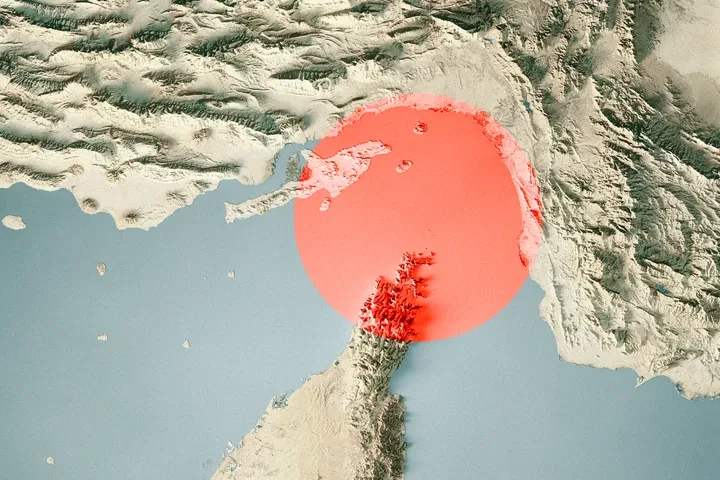
Even if Qatar resumes full production quickly, the semiconductor industry remains exposed to disruptions to key regional shipping routes. The vast majority of energy and petrochemical exports from the Persian Gulf pass through the Strait of Hormuz, a critical maritime chokepoint. If shipping through this corridor is interrupted for an extended period, it would slow the movement of industrial gases and petrochemical inputs that chipmakers depend on.
Ongoing disruptions to regional oil and gas exports have already lifted global energy prices: at the time of publication, Brent crude, the European benchmark, trades at roughly $80 per barrel. Energy costs make up a large share of total semiconductor manufacturing expenses, as fabrication facilities run massive, constantly powered and cooled clean rooms, leaving producers extremely sensitive to global energy price swings.
South Korean industry representatives warn a prolonged conflict could push energy prices even higher, translating to higher production costs for chipmakers and eventually higher prices for end consumers. These risks come as global semiconductor supply chains are already stretched thin by surging demand from AI computing. Booming chip orders from AI data center operators have already tightened supplies across multiple electronics sectors, including smartphones, laptops, and automobiles.
Long-Term Instability Threatens Growth
For now, the immediate impact on global chip production remains unclear. Major chipmakers typically maintain diversified supplier bases and stockpile specialty gases and chemicals to weather short-term disruptions. But if regional instability continues, pressure on supply chains will only grow over time.
A drawn-out conflict that damages energy infrastructure, export facilities, or key shipping routes could gradually squeeze the global supply of core chipmaking materials. This could also delay expansion plans for major tech companies building out artificial intelligence infrastructure in the Middle East. Firms including Amazon, Microsoft, and Nvidia have already positioned the United Arab Emirates as a key regional hub for AI computing capacity.
This story originally appeared on WIRED Middle East.