Right-wing content creator Nick Shirley—whose viral YouTube investigation prompted the Trump administration to roll out a major immigration crackdown in Minnesota—says his latest bombshell video purporting to expose widespread fraud in California received critical insider data support from Edward Coristine, one of the earliest members of the controversial Department of Government Efficiency (DOGE), who is better known online by the handle “Big Balls.”
Coristine joined DOGE at just 19 years old with no prior professional government experience, and was deployed to work across multiple federal agencies, including the U.S. Social Security Administration (SSA) and Small Business Administration (SBA). Before signing on with DOGE, Coristine spent several months working for Elon Musk’s neurotech firm Neuralink, and previously launched his own startup infamous for recruiting black hat hackers.
During an interview with Coristine posted to Shirley’s YouTube channel this past Thursday, Shirley claimed Coristine personally pulled Medicaid spending records targeting California-based businesses to aid his fraud probe. Coristine did not push back on the account, and instead told Shirley the federal government needs to create more avenues for outside crowdsourcing of fraud investigations.
The data Coristine allegedly shared with Shirley comes from a public dataset released by DOGE’s team at the U.S. Department of Health and Human Services (HHS) back in February. At the time of the release, HHS’s DOGE team posted on X (formerly Twitter) calling the collection “the largest Medicaid dataset in department history,” and claimed it would enable outside actors to detect large-scale fraud rings.
“After that, I traveled to California using the dataset you helped me extract, and these fraudsters weren’t even making an effort to cover their tracks,” Shirley told Coristine during the conversation.
Coristine argued that by opening government spending data to the public, independent vigilante investigators like Shirley—who he says are “better positioned” than federal bureaucrats—can root out fraudulent payments that would otherwise go undetected. “You’re someone who actually went to the places where we’re spending all this money, confronted the people involved, and found out the truth,” Coristine said. “I think we just have to create more opportunities for that kind of work to happen. We have to keep opening government data to the public.”
This link between one of the right’s most prominent anti-fraud influencers and one of DOGE’s most notorious early engineers lays bare the next phase of DOGE’s evolution, and how the Trump administration is advancing its long-stated campaign against what it calls federal “waste, fraud, and abuse.”
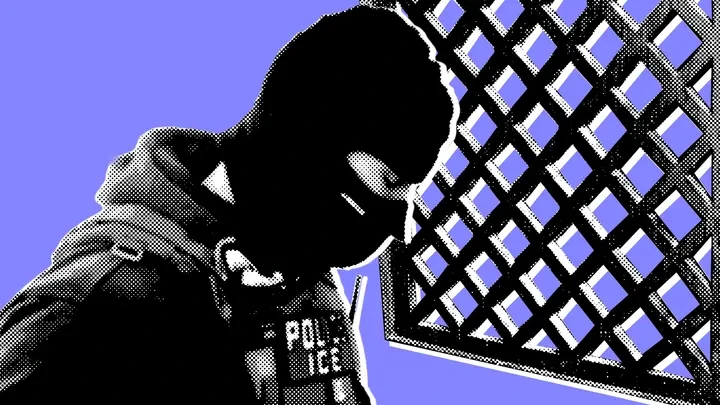
Shirley’s viral videos have already served as core justification for the Trump administration’s crackdowns on both fraud and unauthorized immigration. When Shirley released a December video claiming he had uncovered more than $100 million in widespread fraud at childcare programs run by Somali communities in Minnesota, top Trump administration officials including Vice President JD Vance shared the video widely. The viral clip sparked a major deployment of immigration enforcement agents to the state, which led to mass arrests and detentions, and ultimately left two protesters—Renee Good and Alex Pretti—dead.
Early in the joint YouTube conversation, both Shirley and Coristine explicitly tied allegations of federal fraud to immigrant and foreign communities, offering no evidence to back up the broad claims. “A lot of the money is being stolen and siphoned right out of the country,” Coristine claimed. “Once that money is in a suitcase headed to Somalia, it’s never coming back,” Shirley responded.
Later in the interview, the pair pointed to specific examples of “waste and fraud” flagged by DOGE, including U.S. funding for a “Sesame Street-style children’s television program in Iraq” and tax policy consulting work in Liberia. Both projects were backed by the U.S. Agency for International Development (USAID), which DOGE effectively shut down in the first months of 2025. Coristine also repeated sharp criticism of the SBA, arguing the agency performed “a terrible job” managing its emergency loan programs particularly at the peak of the COVID-19 pandemic, claiming there were “no checks at all on who was receiving money, not even the most basic checks of like, if [a Social Security number] is real.”
“It’s no secret that the Biden administration took an extraordinarily lax approach to underwriting and fraud prevention at the SBA,” said SBA spokesperson Maggie Clemmons. That claim aligns with a 2025 Government Accountability Office (GAO) report that found the SBA did approve emergency loans before its full identity verification system was fully operational.
While Coristine is no longer a formal member of DOGE, he remains employed by the federal government as head of engineering for the White House’s National Design Studio (NDS), an initiative led by Airbnb co-founder and U.S. chief design officer Joe Gebbia. Gebbia previously served as a DOGE member at the Office of Personnel Management (OPM), where he led work to modernize the federal government’s retirement system. Coristine rejected the idea that DOGE’s original mission has concluded, telling Shirley: “I think the cabinet secretaries … are continuing the mission and mantra of DOGE.”
Shirley used the interview to push a number of longstanding far-right conspiracy theories about systemic fraud. Specifically, he claimed that in California, “There's a lot of dead people who are registered to vote. There's a lot of people who are dead who are still receiving Social Security.” Elon Musk made identical false claims about dead people continuing to collect Social Security benefits during his time leading DOGE policy work. However, independent policy and tech experts have repeatedly noted that these false claims almost always stem from DOGE members’ lack of understanding of how the SSA’s legacy data systems and underlying code are structured.
This was not Shirley’s first time pushing unsubstantiated claims about California’s voter registration system. On February 16, he released a video claiming he had identified active voters over 125 years old on the state’s rolls, and found 30 registered voters who listed a UPS store as their residential address. In an X post sharing the video, Shirley labeled California “the breeding ground for voter fraud in America.” But leading election researchers overwhelmingly agree that widespread systemic voter fraud does not exist in California.
Shirley’s allegations align perfectly with a key policy and political priority for the Trump administration and its base. Earlier this week, Trump signed an executive order requiring the creation of a national list of eligible voters. In February, during an interview on the podcast hosted by former FBI deputy director Dan Bongino, Trump claimed undocumented immigrants are voting illegally in large numbers, and argued that Republicans “should take over the voting in at least 15 places.” There is no evidence that illegal voting by noncitizens poses any meaningful threat to U.S. elections. A 2017 analysis from the Brennan Center for Justice found just 30 confirmed or suspected incidents of noncitizen voting in the 2016 election, out of more than 23.5 million votes cast that year.
Coristine also shared several previously unreported, unusual details about ongoing work at the NDS. He revealed that NDS’s current chief creative officer is Nate Brown, who previously collaborated with Ye, the artist formerly known as Kanye West, on projects including Ye’s 2021 album Donda. Coristine also said one of NDS’s top upcoming priorities is advancing “freedom” and bringing “free speech to Europe.” Though he offered no additional details about what that project would entail, Coristine said more information would be released in the near future.
Shirley and Coristine did not immediately respond to requests for comment from WIRED for this reporting.