How Gen Z Used Discord To Topple Nepal’s Government — And Rewrite The Rules Of Democracy
It was 11:30 p.m. on Tuesday, September 9, when 26-year-old Rakshya Bam climbed out of an army jeep outside Nepal’s military headquarters. Kathmandu was locked down, pitch-black, and Bam had gone more than 24 hours without sleep. Her eyes were rimmed red and glazed over, thin fatigue-pinked veins snaking through the whites—visible proof of how much chaos and exhaustion she had lived through in just four days.
What started as scattered anger shared on TikTok feeds, Discord servers and encrypted messaging apps had exploded into a youth-led uprising that shook Nepal to its core. In barely a week, Bam had watched friends gunned down by security forces, seen parliament buildings go up in smoke, and lived through the total collapse of Nepal’s sitting government. Prime Minister K. P. Sharma Oli had stepped down, and the army had deployed to the streets to claim control, vowing to restore order. Now, Bam was one of 10 young activists summoned to an unprecedented meeting with the country’s top military leadership.
As she walked through the compound’s heavy gates, flanked on both sides by soldiers in full combat gear, Bam felt her phone buzz nonstop in her pocket. Online, misinformation spread faster than the protests themselves. Messages pinged one after another: “The king is back.” “The army has staged a coup.” Discord channels hummed with nonstop chatter, while foreign diplomats called nonstop, begging the group to “save Nepali democracy.”
Inside a sterile, lockable meeting room—all phones were stored outside before the meeting began—the 10 Gen Z activists were greeted by Army General Ashok Raj Sigdel. His crisp dark green uniform was dotted with glinting medals, his expression stern. For three hours, Sigdel questioned the group about their protest motives, backgrounds, and demands. When the questioning ended, he laid out an ultimatum no one had expected: their movement had sparked the crisis that brought down the government, so they would be the ones responsible for shaping the interim administration that took its place. Just days earlier, these young people had been ordinary citizens trapped in the grind of daily life. Now, the military was asking them to help pick Nepal’s next prime minister.
Bam grew up in Kailali, a lowland district in Nepal’s remote far west, where subtropical plains stretch all the way to the Indian border. The region is known for its dense sal forests and fertile farmland, but decades of government neglect left it one of Nepal’s poorest areas. That context of widespread neglect is what shaped the uprising that would upend the country.
Nepal is one of South Asia’s youngest nations, with a median age of just 25.3, compared to 39.1 in the United States. High fertility rates over past decades created what demographers call a “youth bulge”—the largest in South Asia’s modern history. But for millions of young people like Bam, there is almost no viable future waiting for them at home. Nepal’s economy has effectively exported its youth labor force to Malaysia, South Korea and the Gulf states, instead of creating jobs and opportunity within its own borders. The country’s minimum wage cannot cover basic living costs, leaving young Nepalis with only two brutal options: leave to study abroad, or leave to work abroad.
Those who choose to stay are stuck navigating a political system that was never built to work for them. Even with steep taxes on everyday goods, basic essential services are broken and dysfunctional. Nepal’s journey to democracy has been long and bloody: the first democratic movement in the 1950s brought free elections, before the monarchy retook total control. In the 1990s, citizens rose up again to reclaim democracy, but poor governance, a decade-long civil war, and a 2005 royal coup—when King Gyanendra dissolved parliament, arrested opposition leaders, and imposed a total media blackout—snuffed out that new hope.
Even after the monarchy fell and the civil war ended, the structural problems that drove decades of unrest never went away. The Maoists, who launched a 10-year “People’s War” in 1996 demanding a republic that would fix deep inequality, especially in rural Nepal, eventually joined mainstream politics. Their movement, once rooted in the anger of marginalized groups—Dalits, Indigenous communities, poor farmers locked out of Kathmandu’s elite circles—helped establish Nepal as a federal democratic republic. But over time, the Maoists became part of the same corrupt political establishment they had once fought to destroy. Power still only circulates among the same small group of long-time parties and elite leaders.
For Bam and her peers, social media gave them a space to voice their anger, build solidarity with other young people, and speak freely without being silenced by the establishment. Bam started posting about corruption and inequality on her social channels, sharing photos of herself at small local rallies, holding a megaphone or hand-printed flyers. Then, in early September 2025, a new viral trend took over Nepali social media that would change everything.
Nimesh Shrestha, a Kathmandu-based video editor and content creator, had built his following on TikTok making silly slapstick comedy and quirky skits. His algorithm usually fed him similar lighthearted content—but in early September, he started seeing a very different type of video filling his For You Page.
The clips showed luxury cars glinting in Kathmandu’s sun, the children of top Nepali government ministers stepping out in designer clothes and wearing six-figure watches. Other reels cut between footage of these politicians’ opulent weddings and images of impoverished Nepali communities struggling to access clean water and food. The “Nepo Kid” trend, which first took off in the Philippines and Indonesia, had finally arrived in Nepal—and as it spread, the tone of the videos shifted. They became rawer, more chaotic, and more emotionally charged, turning abstract issues of corruption and inequality into something tangible, instantly recognizable, and shareable across the internet.
When the trend racked up millions of views and spilled into mainstream news coverage, the government panicked. On September 4, Nepal’s Ministry of Communications and Information Technology ordered internet service providers to block access to 26 major social media platforms, including Facebook, Instagram, X, and YouTube. The official reason? The platforms had failed to register with the government as required by a Supreme Court order. But when users opened their apps, they were met with frozen feeds, failed post uploads, and connection error messages—and no one bought the government’s explanation.
Coming right as the Nepo Kid videos flooded feeds, the government’s excuse rang hollow. For young Nepalis, the ban wasn’t about regulatory compliance—it was about fear. The political establishment, they believed, was terrified of being exposed.
VPN downloads skyrocketed within hours. Nepalis traded VPN links and workarounds in private chats and secret Discord servers, tunneling back online through encrypted connections. The government’s crackdown only made young people more defiant, not less.
On September 6, quiet outrage boiled over into full-blown fury. An 11-year-old girl named Usha Magar Sunuwar was hit by a black SUV carrying a provincial minister from the ruling party. The driver sped away from the scene without stopping, but the entire crash was captured on CCTV. The clip went viral within hours.
Later that same day, Shrestha and Bam were both added to a new Discord server called Youths Against Corruption, launched by Hami Nepal, a nonprofit founded by activist Sudan Gurung in 2015 after a deadly earthquake leveled neighborhoods across central Nepal and killed nearly 9,000 people. Hami Nepal only had around 20 active volunteers, but it had built a huge online following through its disaster relief work after the 2015 quake and during the COVID-19 pandemic. When the government blocked mainstream social media, the same networks that had once coordinated oxygen deliveries and flood relief quickly shifted gears to organize political activism.
Discord was one of the platforms the government had banned, but it used far less bandwidth than major social media sites, making it much easier to access via VPN. Youths Against Corruption quickly grew into the largest of the new protest servers that popped up after the internet shutdown, hitting more than 150,000 members in just a few days.
Late on September 6, Shrestha says, after hours of frantic coordination on Discord, the group began preparing to take their protest to the streets of Kathmandu. Shrestha posted updates to his TikTok and Instagram every few minutes, sharing safety tips: what to do if police deploy tear gas, emergency contact numbers, which routes to avoid. His follower count tripled in 48 hours, and thousands of young people messaged him asking how they could join. Protest guides were shared widely online, teaching participants how to stay safe and keep demonstrations peaceful. Discord let organizers coordinate flash protests, promote viral hashtags like #OliResign, #GenZProtest, and #WakeUpNepal, and warn each other in real time about police movements.
On September 8, Bam stood in the back of a pickup truck, microphone in hand, coordinating as dozens of youth groups converged on central Kathmandu for a mass protest. She read a list of nonviolence rules to the growing crowd: “We will not break trees or vandalize property. We will not shout, start fires, or create chaos. No violence, no conflict. We will not threaten anyone or use foul language. We will stay peaceful. We will be civil and responsible. We are not here carrying any political party’s agenda.”
The crowd cheered, and she waved the Nepali flag, hoping her words would keep the demonstration on track. But the crowd grew far faster than anyone had anticipated. Unorganized groups she didn’t recognize began pushing toward restricted government zones, ignoring the curfew and ignoring her pleas for calm. Barricades outside parliament began to topple. Vehicles were set on fire. Stones flew through the air. Bam watched tear gas canisters arc through the afternoon sky like flaming projectiles. Gunfire broke out moments later.
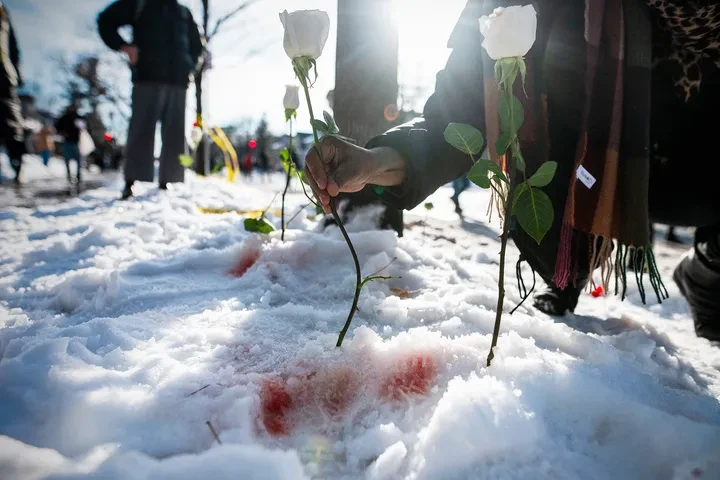
Panicked police commanders, fearing the crowd would breach the parliament compound, opened fire on the protesters. Bam watched young people collapse to the ground, shot in the head. By the end of the unrest, at least 72 people were dead and more than 1,000 injured across the country, making it the deadliest period of unrest in Nepal’s recent history. The next day, despite the massacre and a strict curfew, thousands of young protesters returned to the streets, still determined to demonstrate peacefully. But alongside the peaceful protesters, violent mobs emerged. Bam watched as groups vandalized government buildings, set private property on fire, and attacked political leaders’ homes. Smoke hung over Kathmandu.
As protests spiraled out of control and government buildings burned, Prime Minister Oli resigned. Within hours, the army was deployed to the streets, enforcing a strict 6 p.m. to 6 a.m. curfew and promising to restore stability.
Social media let the entire world watch the government crackdown in real time. Nepali social feeds were flooded with cellphone footage of police opening fire on young protesters, bodies collapsing in clouds of tear gas. A British travel YouTuber went viral after he got caught in the middle of the violence. Shrestha describes following the protests online as “organized chaos.” “It was wild. Hundreds of people talking at once, memes flying around, live updates from the streets. You felt the chaos of the city right through your screen,” he says.
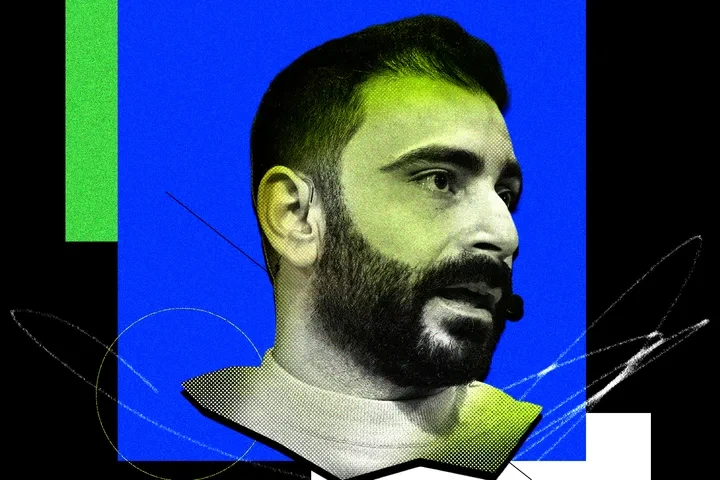
One voice cut through all the noise on the Youths Against Corruption server. Known only by his username “Jalebi,” he asked to keep his real identity private, but his username and voice were the most recognizable on the server. With years of experience running Discord channels and a background in tech, he had volunteered to moderate the server when it was first created.
When violence broke out on the streets, Jalebi quickly stepped into the role of emergency coordinator. He would click on a username, open a direct message: “What’s your phone number? What’s your location?” A caller would confirm their address and describe the injuries of a family member. Jalebi would post the details to the server’s dedicated rescue channel, and nearby volunteers would respond. He would get them on a group call to coordinate pickups. That same night, he and a team of volunteers drove out to evacuate a family from a burning house—the request had come through Discord, and Jalebi had verified it by phone before the team left.
What started as a platform for organizing protests quickly turned into a full-fledged emergency response network. Moderators now verified help requests, coordinated rescue missions, and organized blood donations for people trapped under curfew. As the server grew past 100,000 members, Jalebi scrambled to recruit 15 to 20 more volunteer moderators to keep up with the flood of requests.
At first, the server was open to anyone—any member could invite anyone else. International YouTube channels found the server and started livestreaming its chats, drawing thousands of foreign users flooding in. Some were just curious observers, but many spread propaganda, incited violence, or sent fake emergency requests designed to waste moderators’ time and expose their volunteer networks. One cybersecurity firm estimates that as many as one-third of the social media accounts driving the protest conversation were fake.
Jalebi quickly locked down invitations and restructured the server. He and his team created separate channels for different purposes: verified rescue requests in one, general discussion in another, protest coordination in a third. His job became triage: deciding who got to speak in voice channels, which messages to pin to the top of channels, and which users to silence or ban for spreading misinformation or hate. Death threats and hate messages piled up in his inbox every hour.
By September 9, the violence had shifted toward the government, with cellphone footage showing smoke rising over the capital, government buildings in flames, and mobs storming abandoned police stations. Guns, batons, and police uniforms lay scattered across the ground as Kathmandu burned.
A few hours after their meeting with General Sigdel on September 9, Bam, Shrestha, and a small group of core activists huddled in their safe space—a small room somewhere in Kathmandu that had become their regular meeting spot during the uprising. It was the middle of the night, their faces lit only by the glow of phones and laptop screens. Thousands of people logged into Discord that night as the group tried to work through the enormous task ahead of them: filling the power vacuum left by Oli’s resignation.
It was a new kind of democracy, negotiated not by veteran politicians in tailored suits, but by anonymous users with usernames like meme_lord, rebel_rana, momo4justice, TheLostGhost, nepali_anon18, and 2pac, and profile pictures of cats in sunglasses and anime characters. Chats scrolled with a mix of English and Nepali text, punctuated by voice notes: one user shouting live updates from Maitighar, the central Kathmandu square adjacent to key government offices, another playing a protest song through their mic, a third laughing nervously to cut the tension. At points, messages scrolled by so fast no one could keep up.
But this chaotic model of direct democracy was far from perfect. One activist, who asked to remain anonymous, experienced its flaws firsthand. Amid the frenzy of polls and speculation, they became the target of coordinated online harassment after unproven claims about their connections to corrupt politicians spread across Reddit and Discord. The harassment was so relentless it pushed them offline entirely. “One minute you’re part of a movement, the next you’re getting death threats through the same channels that built it,” they said. “Someone can post a half-made-up story about your family’s ties to corruption, and you’re done. No verification, no due process. Just mob justice.”
As night turned to morning, the activists debated who could lead the country, how to build a consensus, and how to fill the power vacuum as quickly as possible. They weighed the risks of every option and worked out a way to formalize their recommendation to the army. By the time the sun rose over Kathmandu’s skyline, they had narrowed the list down to a handful of candidates—but they needed one name to present to the general.
“Please decide on a representative right now. We do not have time,” Jalebi, the moderator, urged the group. Then he created a public poll, pulling candidates from a range of public figures and youth influencers. The question was simple: Who should be the interim prime minister? The options were Sushila Karki, the former chief justice; Balendra Shah, a rapper, engineer, and Kathmandu’s first independent mayor; a popular YouTuber and lawyer known as “Random Nepali”; and an option for other candidates. Votes rolled in over hours of chaotic open discussion.
“It was about showing we had a real consensus,” Jalebi explains. “The poll was our evidence, the only way to measure what Gen Z across the country was thinking. We ran it on Discord, but we also reached out to civil society groups and other stakeholders to make sure it reflected more than just online chatter.”
After hours of voting across multiple polls, former chief justice Sushila Karki emerged as the clear winner. Karki has a long history of activism on women’s rights, anti-corruption, and social justice—issues that resonate deeply with young Nepalis—and she had become one of the movement’s most beloved figures after footage of her joining protesters on the streets went viral.
Three days later, Rakshya Bam stood beneath the marble arches of Nepal’s presidential residence as parliament was dissolved and Karki prepared to take the oath of office as Nepal’s first female prime minister. As interim prime minister, Karki will lead a transitional government tasked with tackling corruption, increasing government transparency, and steering the country toward new general elections. Watching Karki take the oath, Bam felt a sudden, clear sense that she and her peers had rewrote Nepal’s history.
Many elements of this uprising will feel familiar to observers. Analysts have drawn parallels between Nepal’s Gen Z revolt and the 2011 Arab Spring, where social media also became a powerful tool for mass mobilization, calling this moment a “South Asian Spring.” In recent months, similar youth-led protests have broken out in Madagascar and Morocco.
But what makes Nepal’s uprising unprecedented is the way young activists used a digital platform like Discord to choose their new leader—messy, transparent, and completely outside the traditional political system, says Sudhamshu Dahal, a researcher who studies the social impact of communication technology. The current movement is spontaneous, leaderless, and emotionally charged—united more by their rejection of corruption and political repression than by a shared, detailed vision for what comes next.
That means the same digital infrastructure that let young activists mobilize so quickly can just as easily be weaponized against them. As the Youths Against Corruption server grew to more than 150,000 users in the days after the protests, paranoia spread through the